Dan’s Final Thoughts on Charles Dickens

It’s the final Dickens Tuesday and the second-to-last day of my Reading is Fundamental campaign. Bad news: I ran out of Dickens works to review. There are a few more of his books that I’d like to read, but I just didn’t have the time this year. 

I only started reading Dickens two years ago, so give me some time to get to the rest of his library! (Though there’s a good chance I’ve already read the “good ones” and so the books that remain may be boring and dull and hard to get through.)

While I don’t have a new book to review today, not to worry! Dickens Tuesday can still be saved! 

To celebrate the final Dickens Tuesday, here’s my ranking of his works:

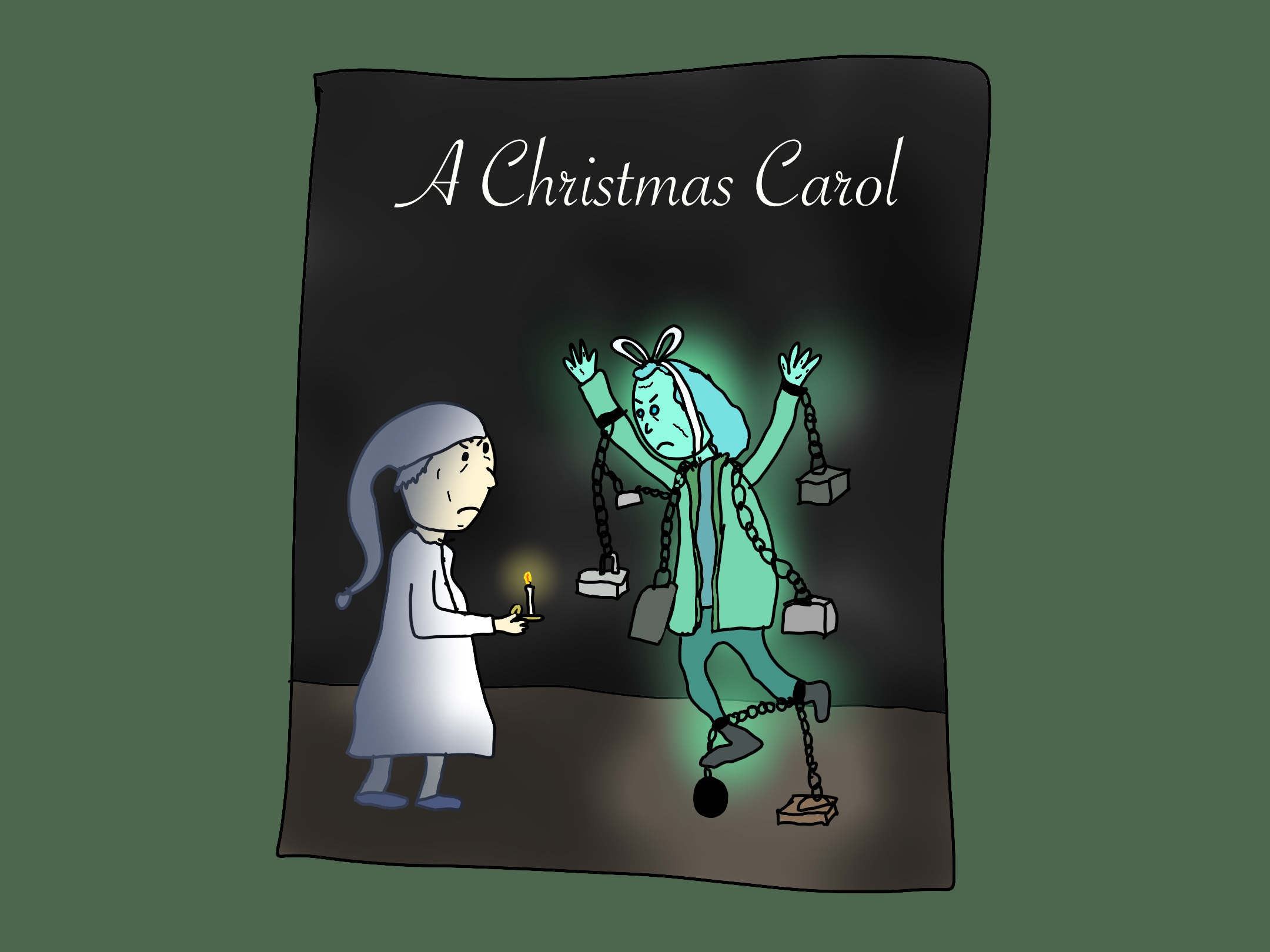
1. A Christmas Carol 

A perfect arrangement of words. 

2. Bleak House 

Weirder than you think, happier than the title suggests, and (after you get past the first 500 pages) is a real page turner. 

3. David Copperfield 

I like this guy. I liked spending 1,000 pages with him and his thoughts. Seems like a good dude. And the book is truly funny. 

4. A Tale of Two Cities

This is not funny. But the tension is real and the story is fast-paced (for Dickens). 

5. Great Expectations

No one told me this was a horror book! I liked being happily surprised and spooked. And the ending feels modern, in a good way. 

6. The Cricket on the Hearth

A sweet little story. 

7. The Pickwick Papers

Some of the adventures are funny, but the real joy is seeing a young Dickens figure out his craft. 

8. Oliver Twist

Meh… Not my cup of Dickensian tea. 

And now for the grand finale, here’s a little rundown of my favorite names Charlie D. dreamt up and put into his novels. Besides concocting intricate plots and coming up with imaginative descriptions, the true power of Dickens was his ability to generate names. 

If you’re feeling sad and depressed as the year comes to an end, just read through this list of names and the wonderfully silly words will surely cheer you up!

  • Serjeant Buzfuz (Pickwick papers)
  • Augustus Snodgrass (Pickwick Papers)
  • Uriah Heep (David Copperfield) 
  • Caddy Jellyby (Bleak House)
  • Prince Turveydrop (Bleak House)
  • Able Magwitch (Great Expectations) 
  • Edward Murdstone (David Copperfield) 
  • The Vengeance (A Tale of Two Cities) 
  • Mary Peerybingle (The Cricket on the Hearth)
  • Harold Skimpole (Bleak House) 
  • Mr. Smallweed (Bleak House) 
  • Phil Squod (Bleak House)
  • Alfred Jingle (Pickwick Papers) 
  • Fred (A Christmas Carol)

If you’ve enjoyed these reviews, or just want to be a good, kind person, please consider donating to my Reading is Fundamental campaign. Any amount will help give kids books! Click here to donate. Thank you!!!
Book Review: The Great Gatsby

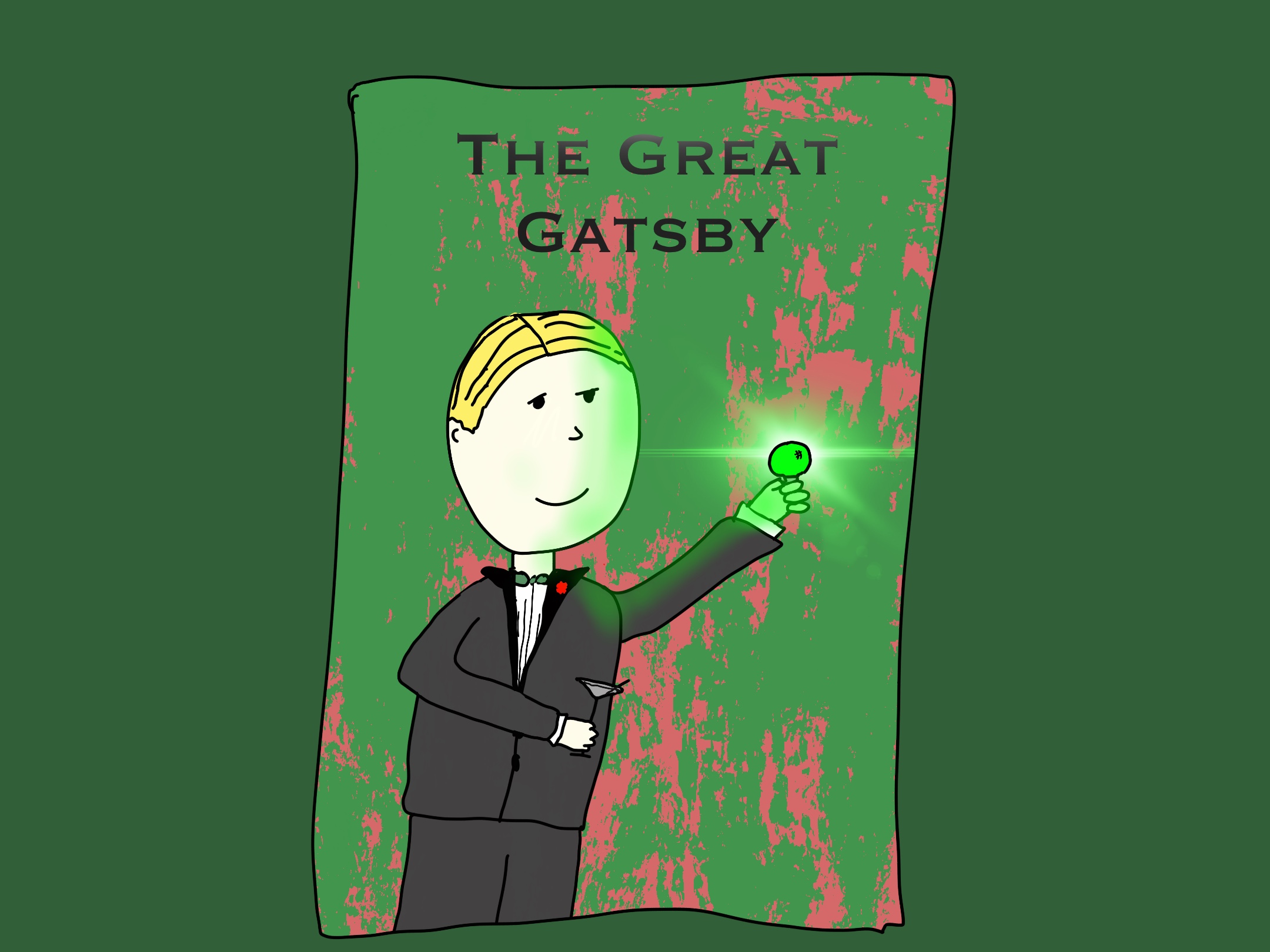
The Great Gatsby, by F. Scott Fitzgerald 

It’s another “Dan Was Assigned this In High School But Didn’t Read It Until He Was 40” classic! And you know what… it’s pretty good. It’s an odd novel because you’re never rooting for any of the characters. At least I wasn’t rooting for them. They are all stupid, artless dumb-dumbs and the type of people I would avoid at a party…a party I wouldn’t be invited to in the first place. [See also: Gone With the Wind.] And I’d be happy at home watching YouTube videos instead of going to their dumb party! 

The story is really simple: Rich Dummy pines for the Boring Lady and everyone is miserable. But…get this…despite being miserable, they have big parties. It’s almost as if the parties are a facade?! Could it be that everything is a facade?!?!? And you know what? I’m not sure the billboard in the novel showing the giant eyeglasses is really just a billboard at all!!!!

This short book is a classic because of how well it’s written. F. Scott doesn’t waste a single sentence or word. Everything means something, and there’s a mountain of subtext about American society, wealth, greed, passion, nostalgia and any other theme you could write about in 10th grade. Writing about this book is really easy. Example: The green light of Daisy’s dock represents man’s desire for green lights. The End.

There’s nothing surprising in the book. While the writing was impressive I didn’t drop the book when I was done and weep to the heavens, “I get it! I get what all the fuss is about!” It’s just a genuinely good book. Now I have to go. I hope you have fun at the party. The ad on this YouTube video about ranking Zelda bosses has finally finished and I gotta get back to it. 

I’m reviewing books to help raise money for Reading is Fundamental. Click here to donate! 

Book Review: The Amazing Adventures of Kavalier and Clay

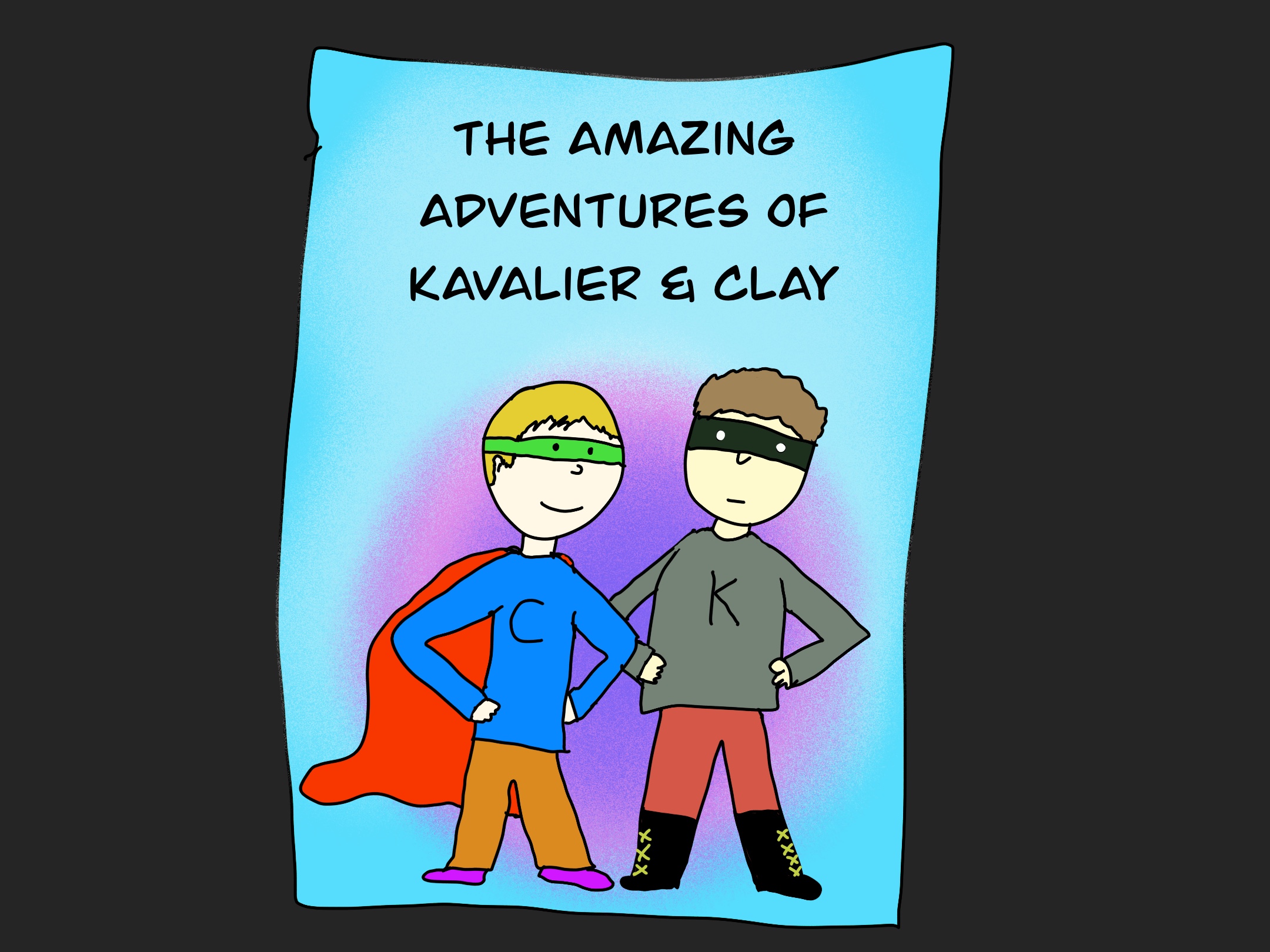
The Amazing Adventures of Kavalier & Clay by Michael Chabon

Sweeping is a weird word to describe a novel. It sounds like it should be a negative thing. “This book is really sweeping…if you know what I mean. As in, it’s sweeping up the garbage! Ha!” 

Maybe it’s just me. 

Anyway, this book is sweeping. In a good way! It’s a sweeping American epic about the birth of comic books and the struggles of two young artists in the mid-1900s New York. Joe Kavalier, a Jewish immigrant who escaped Nazi-occupied Czechoslovakia (using magic tricks!), and his cousin Sammy Clay dream up a comic book character called The Escapist and see their creation take off. 

Though this is fiction, everything feels real. Michael Chabon clearly did his homework to add a lot of cool, fascinating details about this early era of comic book publishing. But there’s a lot more to the story than just these two kids making comics. Their lives take turns, they fall in love, they deal with the harsh realities of mid-century life. But all those traditional Great American Novel ingredients are mixed in with details about publishing, storytelling and myth creation. The result is a great book that works on a meta-level…if you stop to think about it.

I don’t often re-read books, but lately I’ve been feeling like taking this off the shelf and giving it another read. It might hit different now that we’re living in the post-Avengers: Endgame world. (I know there have been more comic book movies since Endgame, but most of those have been sweeping…in the bad way.) 

We’re in the final week of my Reading is Fundamental campaign! Click here to donate!

Book Review: A Christmas Carol

A Christmas Carol, by Charles Dickens

We’re celebrating Christmas Week and Dickens Tuesday with my favorite Dickens! 

A Christmas Carol is a perfect short story. It might be the best short story. Hell, it might be the most perfect piece of word-based entertainment humans have ever created! Okay…maybe I took it a little far. But I truly believe A Christmas Carol is a fantastic work of fiction. 

Some of you are no doubt yawning and confused by my excitement. But that may be due to A Chrsitmas Carol being EVERYWHERE, especially this time of year. So it’s easy to overlook this novella and be blind to its brilliance because A Christmas Carol has become like bacon – bacon is on everything so you don’t even really appreciate it any more.

But imagine not knowing anything about bacon and then taking a bite for the first time. 

Better yet, imagine knowing nothing of this story. Picture yourself coming to this as a newbie, picking up the book for the first time. You don’t know the characters. You don’t know the pop culture references. You don’t know Scrooge McDuck. You don’t know Mr. Burns. 

Coming at this fresh, you’d see that this story is wild! And scary! And weird! And thoughtful! The beginning is an amazing setup and the ending is a total payoff, a victory lap of joy!

If you haven’t read the sacred text, I STRONGLY encourage you to do so. Because it’s in the public domain, it’s easy to pull up the short story on your favorite digital device. Stuck in line at the store? Read this. Sitting on the couch with nothing to do? Read this. Acting miserly and mean for the past few years? Read this. 

You can also get a free audio version from just about every major streaming service or YouTube. The novella only takes a few hours to listen to, so you can knock out the whole thing in a short roadtrip. 

Not only is the story a solid, feel-good romp, but the writing is perfect. Consider all the plot and backstory Dickens elegantly crams into the first chapter. He introduces the characters, the setting and the rules of the ghostly visitations all in a few pages. And those pages are dripping with atmosphere and humor and tension.

Most movie versions stick closely to the original story, because the story is a perfect length for dramatizations. Entire lines of dialogue will be familiar to you, even if you’ve only seen a movie version in passing. Most movie versions tend to just shorten things up a bit – and I think nearly all of them omit a scene of Bob Cratchit looking at the body of his dead son during the Ghost of Christmas Future section. They don’t make a Hallmark ornament for that scene. 

What’s my favorite part? Marley…everything Marley. His introduction is one of the spookiest scenes I’ve ever read. I love the back-and-forth banter/bickering between him and Scrooge, including this iconic line delivered by Scrooge:

“You may be an undigested bit of beef, a blot of mustard, a crumb of cheese, a fragment of underdone potato. There’s more of gravy than of grave about you.”

And while I hate the idea of unnecessary prequels and sequels, I could get onboard with a whole book about Marley, from his turning into a ghost, to his adventures in the spectral realm. 

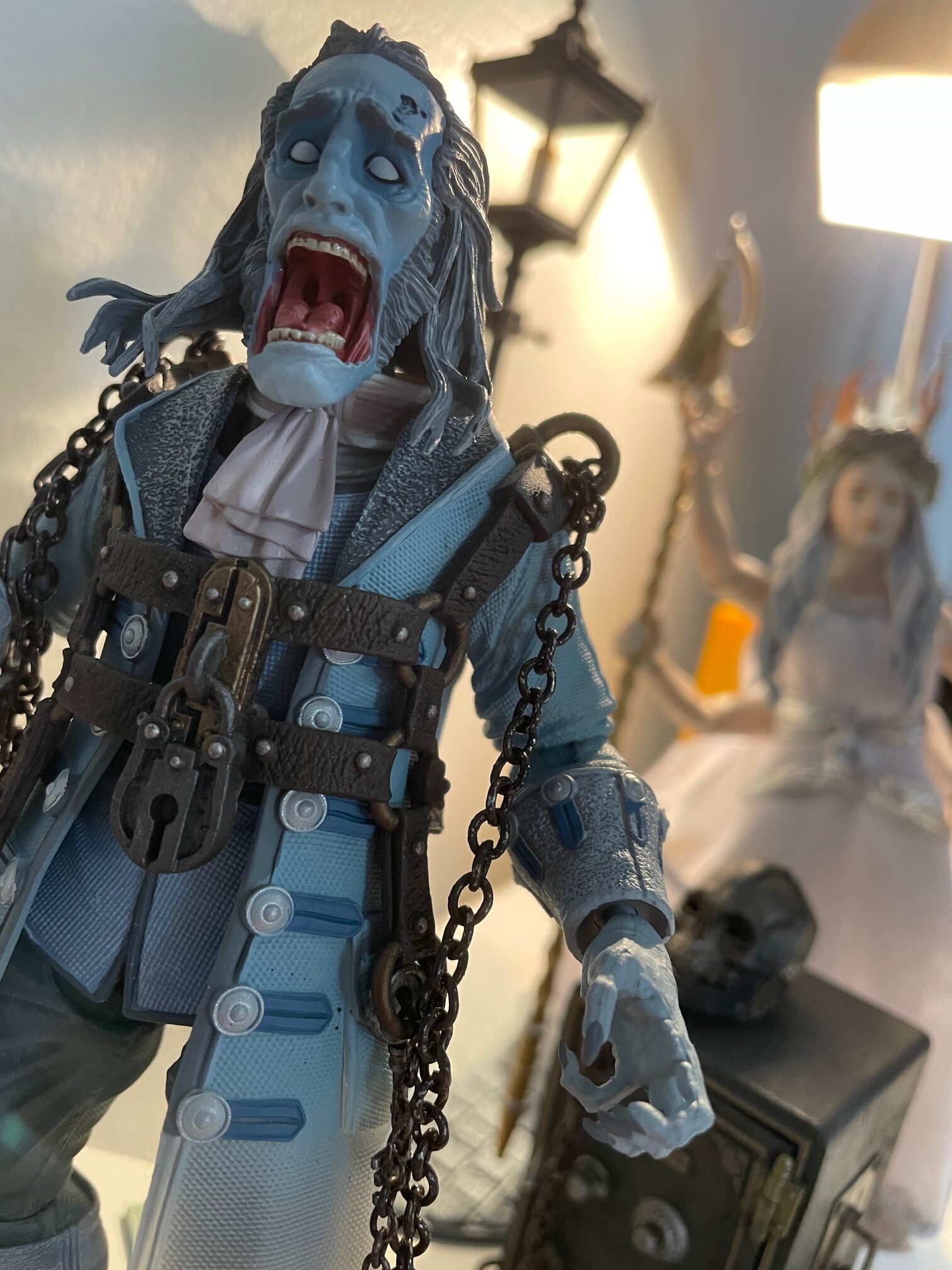
Do I own a Jacob Marley action figure? Yes. He’s looking at me now as I type this. He sends his regards. (And yes, the Ghost of Christmas Past is behind him in the photo.)

I could go on and on about A Christmas Carol – discussing how this was the turning point in Dickens’ career where he went from popular novelist to literary genius. (After writing this, he would go on to write the big, iconic Dickens works such as David Copperfield, Bleak House, Great Expectations and A Tale of Two Cities)

But I think you get the point. I love this story. And I think you should read it…evey year…aloud…with a British accent. 

Don’t be a (pre-ghostly visitation) Scrooge! Help me raise money for Reading is Fundamental. Click here to donate!

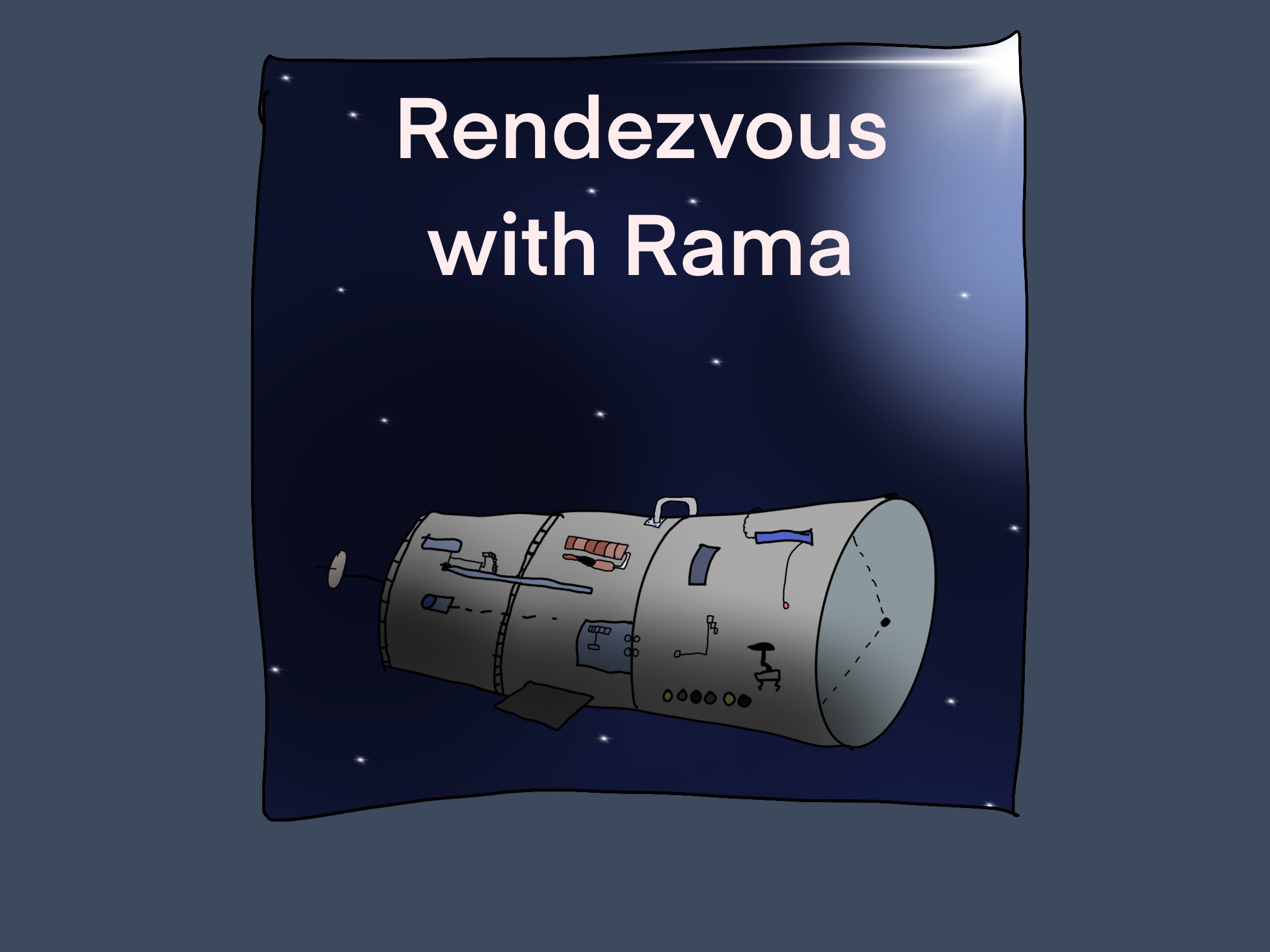
Book Review: Rendezvous with Rama

Rendezvous with Rama, by Arthur C. Clarke

The characters in this classic sci-fi novel are not interesting or memorable. So why is this book so beloved? Descriptions. Arthur C. Clarke is really good at describing really weird things. The story is about an abandoned, mysterious, 30-mile long alien spacecraft/tube. A crew of forgettable humans investigates the ship and the cities inside. And that’s the entire story. 

It helps that this is a short book, but what keeps the story moving forward is reading about the wild alien shapes and things that the humans discover inside the ship. Buildings, frozen oceans, robots, there’s something interesting everywhere humans look.

The book inspired just about every piece of modern sci-fi, so reading it feels oddly, and eerily, familiar. And months and years after reading it, I find myself still thinking about the space inside this ship, and the gravity, and the design. That’s the sign of a good book. There are no big action set pieces, there is no epic battle for control of the universe, and you won’t find any karate fights with aliens. And that’s okay! This is a quiet book best read in a very dark room, very late at night. 

If you want realistic characters dealing with deep emotions of love and regret, look elsewhere. If you want to read about the interiors of a big spaceship, you’re gonna love this. 

I’m reviewing books until the end of the year to help raise money for Reading is Fundamental! Click here to donate!

Book Review: The Name of the Wind

The Name of the Wind, by Patrick Rothfuss

Happy Solstice! There’s nothing like a big, fat fantasy book on the coldest, longest night of the year, and The Name of the Wind has everything fantasy fans could want: Imaginative adventure, cool characters and a long, nearly endless delay between publishing installments in the series. 

The Name of the Wind follows the character Kvothe, a musical theater kid who is also great at magic and killing and…just about everything. And that’s where the story often receives its most damning criticism. The main character is too good at too many things. Sometimes in movies, when the filmmaker wants to show that a character is smart, they toss a Rubik’s cube to the character who solves it in seconds. If you threw a Rubik’s cube to Kvothe, he’d not only solve it, but he’d used it to slay a dragon and invest in Bitcoin when it was just a penny, all at the same time. 

The main story is about Kvothe’s childhood as he enters a magic university. He makes friends, and enemies, has fun, plays the guitar, makes magic lanterns and names things. The naming of things is part of the magic system in this world. If you’re more familiar with Tolkien’s fantasy world, in which magic is just, kinda, there, then all the ins and outs of this magic system may feel boring. Because it is. 

I’m sure some people like all the rules and lore, but I’d much rather just accept that magic happens. I don’t need to know the science behind Superman’s freeze breath to enjoy when he freeze-breathes the bad guys. (Side note: It’s weird that Superman doesn’t freeze-breathe more villains. Seems like that would solve a lot of problems. Just sayin’…freeze powers are fun!)

I like this book, and even read half of the second book in the series. But I got bored with the too-perfect character and gave up. Plus, knowing that the writer is still working on wrapping up the plot after decades of rumors and missed deadlines, makes me think the ending to the overall story is nowhere in sight. I can write an ending for the series:

Superman appeared and freeze-breathed the antagonist. 

The End

Speaking of ends, we’re almost at the end of my Reading is Fundamental campaign. There’s still time to donate and help by clicking here! 

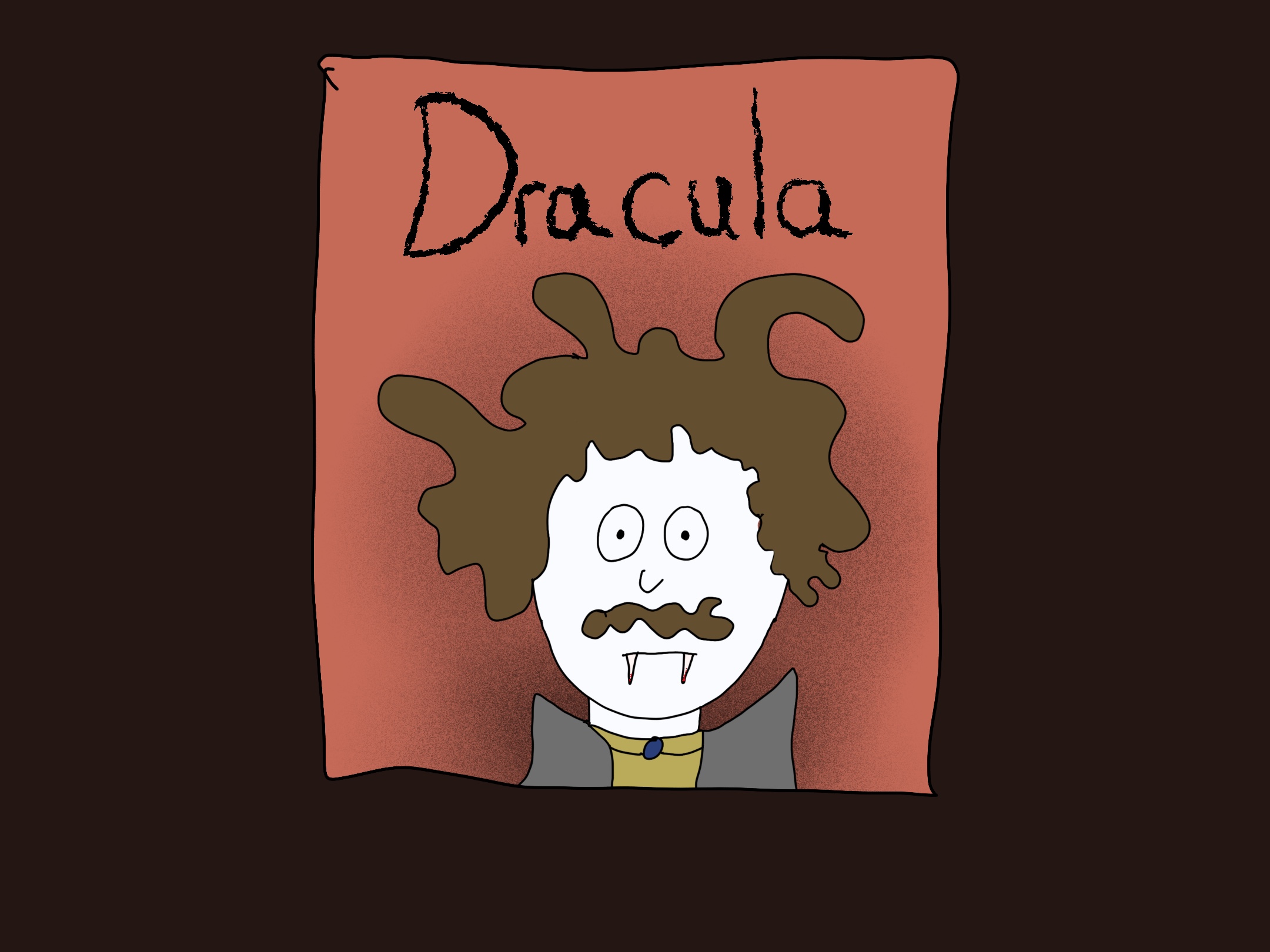
Book Review: Dracula

Dracula, by Bram Stoker

Having spent several long years digesting (and regurgitating) the Twilight books, I thought I should take a look at the grandaddy of all vampire stories. Back in the early days of the pandemic, I picked up Dracula during a seemingly endless autumn and was happily surprised by how much I enjoyed it. 

It’s genuinely scary, with creepy descriptions and scenes that are ingredients in any effective nightmare. But what really shocked me was the modern feel of the story. The last half of the book reads more like a present-day crime procedural than a dusty old book. I was expecting long-winded chapters about lost love, and while there certainly are sections like that, this book is relatively fast-paced and…shockingly…interesting. (Especially when compared to other vampire fiction on the shelf.)

Vampires have never been my favorite monster — they’re always so moody and dull. Dracula kinda fits that mold, but because the story is told from the point of view of other characters, you never get bogged down in Dracula moodiness. He’s not narrating this. It’s not his POV. We don’t even care about his POV. He’s there, in the background, being all cool and sly. He’s not running through meadows and glittering like a 79-cent Christmas card.

I don’t think any movie version has done it justice, but that doesn’t prevent Hollywood from cranking out a new Dracula every few months. If all you know of Dracula are the movies and (shudder) Twilight references, then you should check this out. You might really enjoy it. It’s weirder than you think. It’s scarier than you think. It’s a lot better than you think. 

And there’s not a single “glower” or “teenage boy imprinting on a toddler” in the entire novel!!!

I’m raising money for my favorite charity, Reading is Fundamental. Click here to donate!

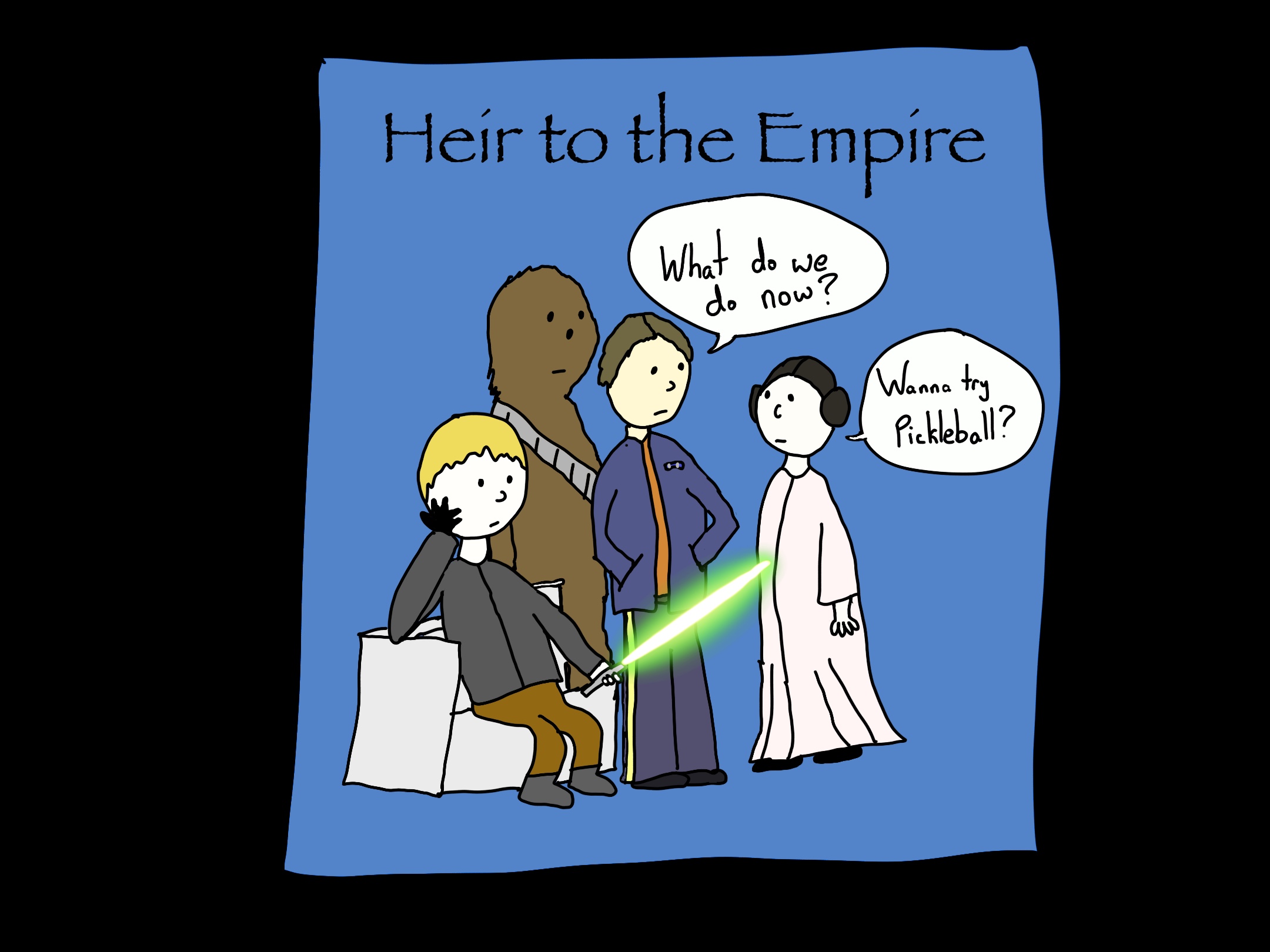
Book Review: Heir to the Empire

Heir to the Empire, by Timothy Zahn

Today, a new Star Wars story is as common as a blue M&M, and just as impactful. But picture a world in which the only Star Wars stories were the original three films (and some dumb Ewok nonsense). That was life when I was in middle school. And then, in the summer of 1991, the first new Star Wars book was released! The story continued! And I ate it up! 

Heir to the Empire was the first of a billion Star Wars books that expanded the universe with new characters mixing it up with old favorites. I remember liking this book, but decided to re-read it a few years ago to see what modern-day Dan would think. 

And modern-day Dan says, “I didn’t like it. Can I go now?” 

There are some interesting ideas here, and Admiral Thrawn is a fun addition to the Star Wars neighborhood, but the book is dull. Granted, this is book one of a trilogy (because of course it is), so maybe the second and third books ramp up the excitement. I’m not going to find out. 

The book isn’t bad, but it didn’t have any Star Wars magic to make me want to keep going with the story. Maybe the Star Wars magic is gone forever. Don’t tell younger me that I wrote this. And whatever you do, don’t tell younger me that there would one day be a Boba Fett show and it was terrible. Because he (I) will (did) cry.

Want to help make the world less bleak? Donate to my favorite charity, Reading is Fundamental and help get kids the literacy resources they need! Click here to donate!

Book Review: Cruel Shoes

Cruel Shoes, by Steve Martin

Steve Martin is my comedy hero. I had a life-size cardboard cutout of the man in my apartment for years. For whatever reason, hearing his album “Lets Get Small” when I was in high school just clicked for me and I was never the same. 

A few years later, I tracked down a used copy of his first book, Cruel Shoes. This was before you could get everything online, so I had to call a used book store in Manhattan and use my mouth words to request a copy. 

The book itself is a very, very short collection of very, very short comedy pieces and a few poems. I think Martin wrote these as part of his “packet” when applying for writing gigs on shows like The Smothers Brothers. Some of the jokes are still funny, but I have to admit that unless you’re a die-hard Martin fan, these mini essays might just seem weird. 

But when I first read it, I didn’t know a person could just write very short stories like this and have that count as a job. I copied the style in college, and even had my own “packet” of micro-stories that would eventually get me my first job at a magazine. Obviously, this books means a lot to me. 

Consider this: Some goofy kid might stumble upon the perfect book today. And that book may change their life! Books are important! Words are important! Reading is important! And you should help increase literacy in America by donating to my Reading is Fundamental campaign!!! Click here to donate!

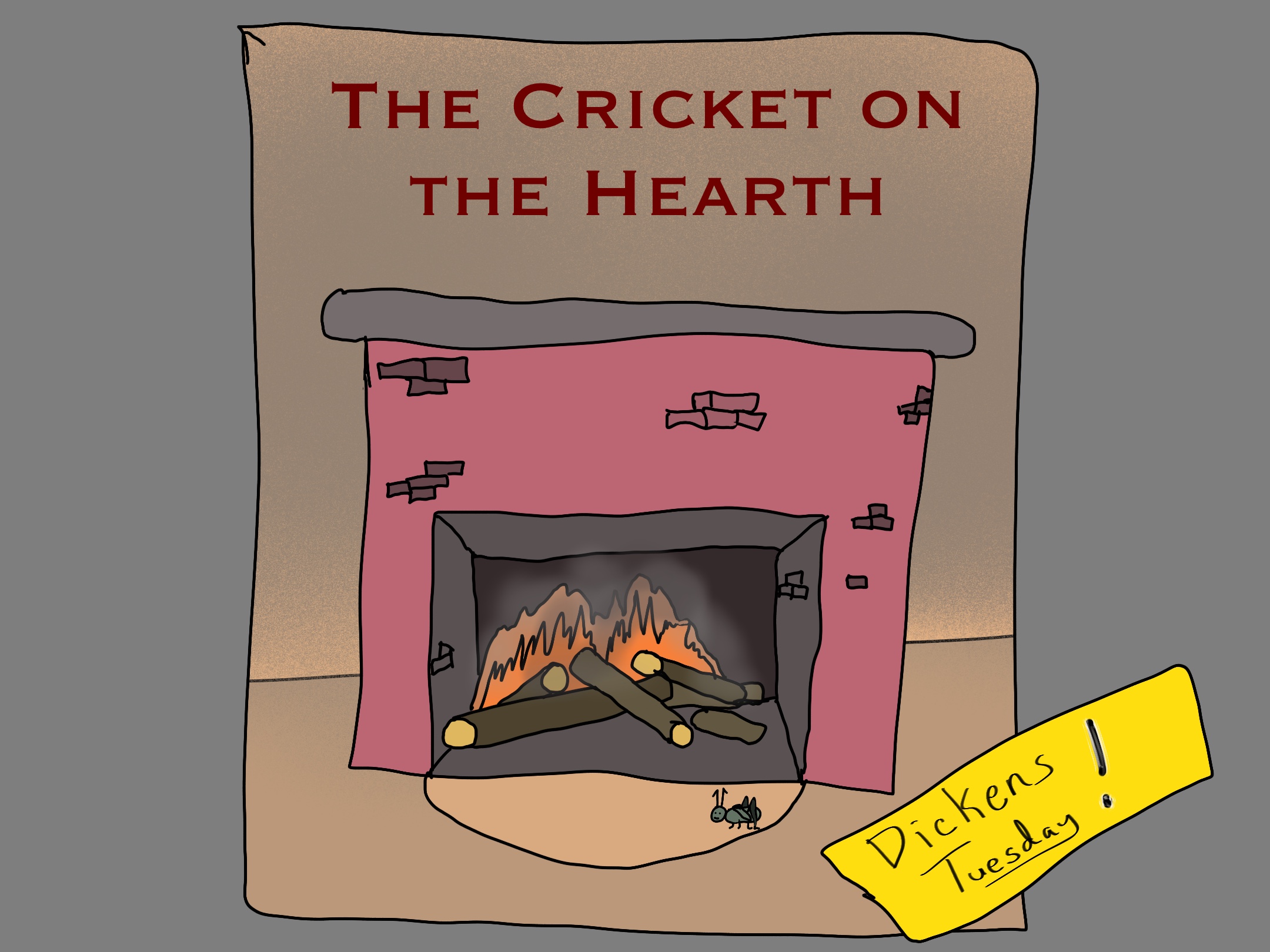
Book Review: The Cricket on the Hearth

The Cricket on the Hearth, by Charles Dickens

Y’all ready for Dickens Tuesday? I’ll wait if you’re not ready. 

Good? Okay! Let’s do this!!!! [air horn]

DICKENS TUESDAY!!!! [cymbal crash]

For this week’s entry, I’m looking at a short story that is wintery and weird. While A Chrsitmas Carol is his most well-known work, A Cricket on the Hearth is another Christmas story by Dickens…though it’s not really related to Christmas except that it occurs in winter and has an upbeat ending. 

Until I read this (just today!) I always assumed it was about a cricket who doesn’t work as hard as an ant and fails to prepare for winter. Turns out, that story is called The Ant and the Grasshopper and was not written by Charles Dickens. I saw a cartoon of The Ant and the Grasshopper when I was a kid and so just assumed a story about a bug dealing with winter was also The Cricket on the Hearth. Nope. Same order of insects (orthoptera), same season, different story. This is the original Antz vs. A Bug’s Life.

Despite the title, the cricket isn’t the main star of the show. This is about British humans. It’s a simple look at domestic life and misunderstandings. It’s a short, sweet story and there is a touch of winter magic, but those looking for iconic Dickensian scary ghost stories may be disappointed. 

But for those of us who appreciate a multi-page description of a kettle boiling, this has exactly what you’re looking for. 

The best way to celebrate Dickens Tuesdays is by donating to my Reading is Fundamental campaign! Click here to donate!