Book Review: The Thief of Always

The Thief of Always, by Clive Barker 

Happy December! I’m kicking off this month of book reviews with a kinda-sorta Christmas story.

The Thief of Always came out in the early 90s, just a few years before the huge YA book boom. Did it pave the way for Harry Potter and the Hunger Games and (sigh) Twilight? No. Not really. But if it came out just a few years later, I imagine this would have been a much bigger, more popular book. Cool people know about this book, but there are a lot who have never heard of it. If you’re one of those total idiot losers who didn’t know about The Thief of Always until this very paragraph, you’re welcome. I just changed your entire life. 

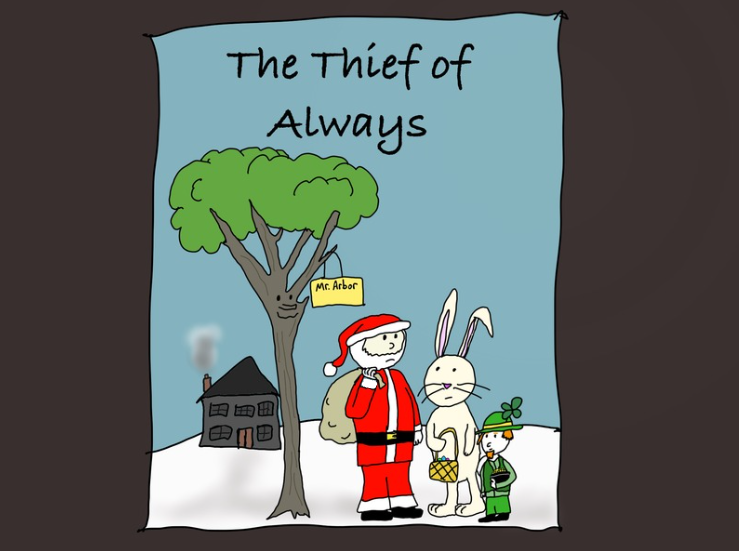
The book tells the story of a kid who is invited to a magical mysterious house that experiences all four seasons of the year every day. So every day you get Christmas, you get Halloween, you get a birthday, you get Arbor Day….what could go wrong? Hint: A lot.

Clive Barker is most known for his mature (sometimes x-rated) horror stories. The guy writes some very disturbing fiction, but he reigns all the gore and sex in for this family-friendly story. It would be like finding out the director of The Human Centipede also also wrote an episode of Gilmore Girls. (He didn’t.) 

I loved this when I read it in middle school, and still enjoyed it decades later when I reread it. While not strictly about Christmas, if we consider Die Hard a Christmas Movie (because it is!), then this is a Christmas book. That’s just science. Because it has Christmas in it, this is a Christmas sentence, even if it also contains spiders and an Easter walrus. See how that works?

This is the final month of my Reading is Fundamental fundraising campaign! Click here to donate! Thank you!!!
Book Review: Gideon the Ninth

Gideon the Ninth, by Tamsyn Muir 

It’s Dune mixed with A Nightmare Before Christmas. That’s not a perfect comparison, but this book is hard to pin down. It’s an epic sci-fi space opera. It’s a sci-fi satire. It’s a queer romance. It’s a gothic fantasy. It’s a cat. It’s a dog. It’s a kitchen appliance. It’s all of that. 

The story is about Gideon (who likes swords), and Harrowhark (a necromancer). The magic and science of this world is all about death, which is where the book’s hard goth aesthetic comes into play. But despite the subject matter, and death, and blood, and bones, the tone is snarky and fun. 

Like a lot of sci-fi, and especially the first entry into a series, there’s a big ol’ mountain of world building in this book. And it’s easy to get confused or lost in all the magic systems and lore. But, the characters are fun, the main plot is somewhat straightforward, and everything feels unique. I haven’t read anything quite like it. That alone makes it worth a read if you dig weird sci-fi that exists well outside the traditional Star Trek/Star Wars tropes. I haven’t continued with the series, mostly because to do so would require me to re-read (or more likely watch a summary about) this book, because it’s been a while since I read and I no longer know the difference between a Lyctor and a Necrolord Prime. 

If you’re home for the holidays and bored, I hope my recent book reviews can shine a light on some good and great (and some so-so) books to help escape the real world. And if you love reading and want to help spread the joy of reading to kids who need it most, consider donating to my Reading is Fundamental campaign! Any amount helps!

Book Review: Harold

Harold, by Steven Wright

Sometimes you know you’re going to like a book, and then you read it, and it blows you away more than you could have predicted. Such is the case with Steven Wright’s Harold

Wright, a standup comedian known for his brilliant, absurd, deadpan one-liners (“It’s a small world, but I wouldn’t want to paint it”), is a comedy hero of mine. I saw his standup show back in the late 90s and it was one of the funniest I’ve seen. 

So I knew I was going to like this book. But instead of just being a collection of funny gags, it’s a surprisingly deep exploration into the mind of a boy in the 1960s. The “story” follows the boy’s random thoughts, many of which are hilarious and all of them are interesting. 

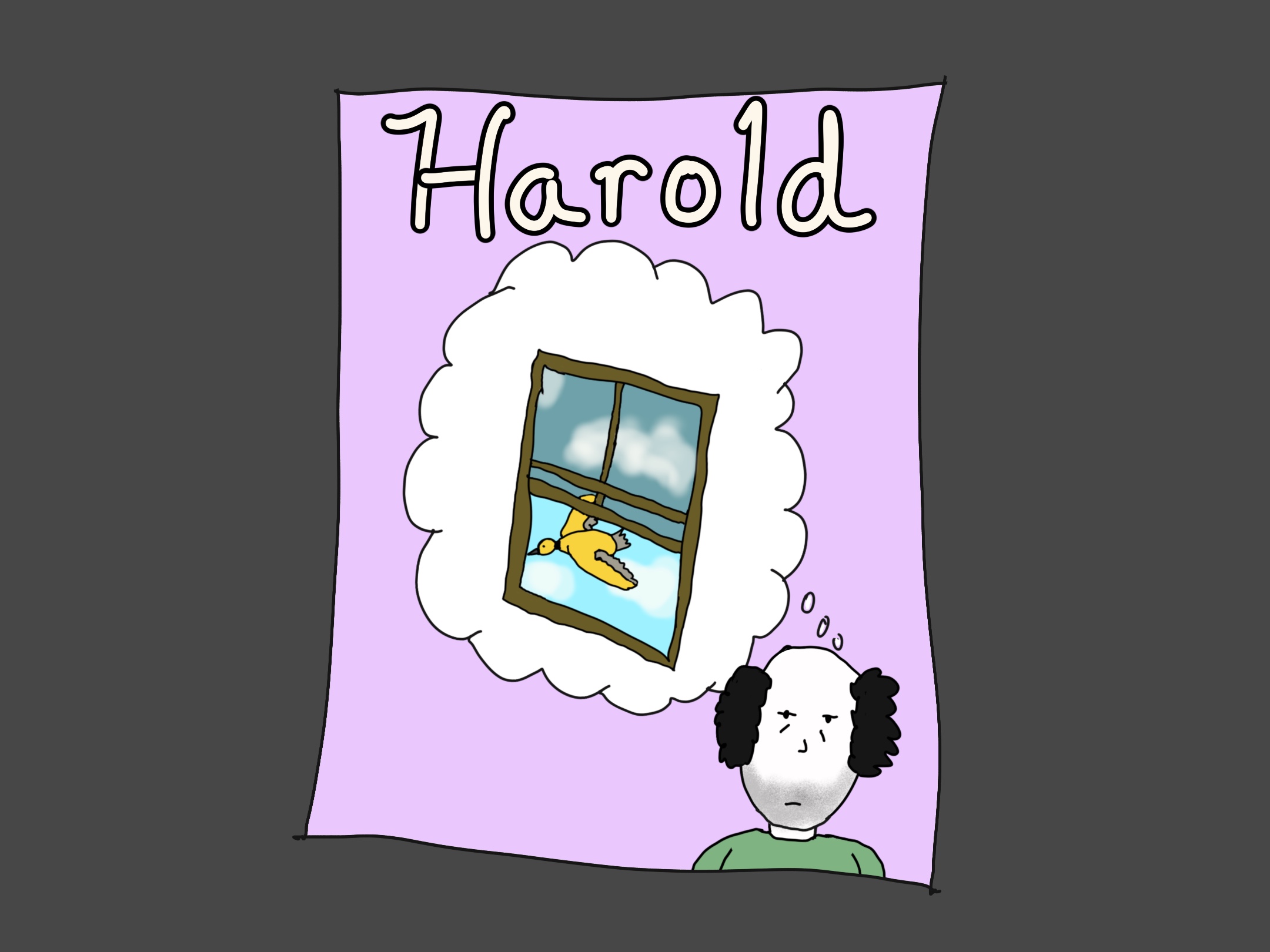
I won’t spoil too much (not that there’s a lot to spoil), but one of the beautiful elements of the story is that the boy pictures every thought he has as a different type of bird flying through an open window in his mind. It’s beautiful. It’s simple. It works. 

Having said all that, there’s a good chance this book was written only for my particular brain. You may read it and find nothing here but some rambling nonsense. This is one of my favorite books of the decade and I highly recommend it. But, if you hate it, I totally get that too. Your mileage may vary. (I also highly recommend the audio book, read by the author himself as only he can.)

Happy Thanksgiving! Please support my Reading is Fundamental campaign!

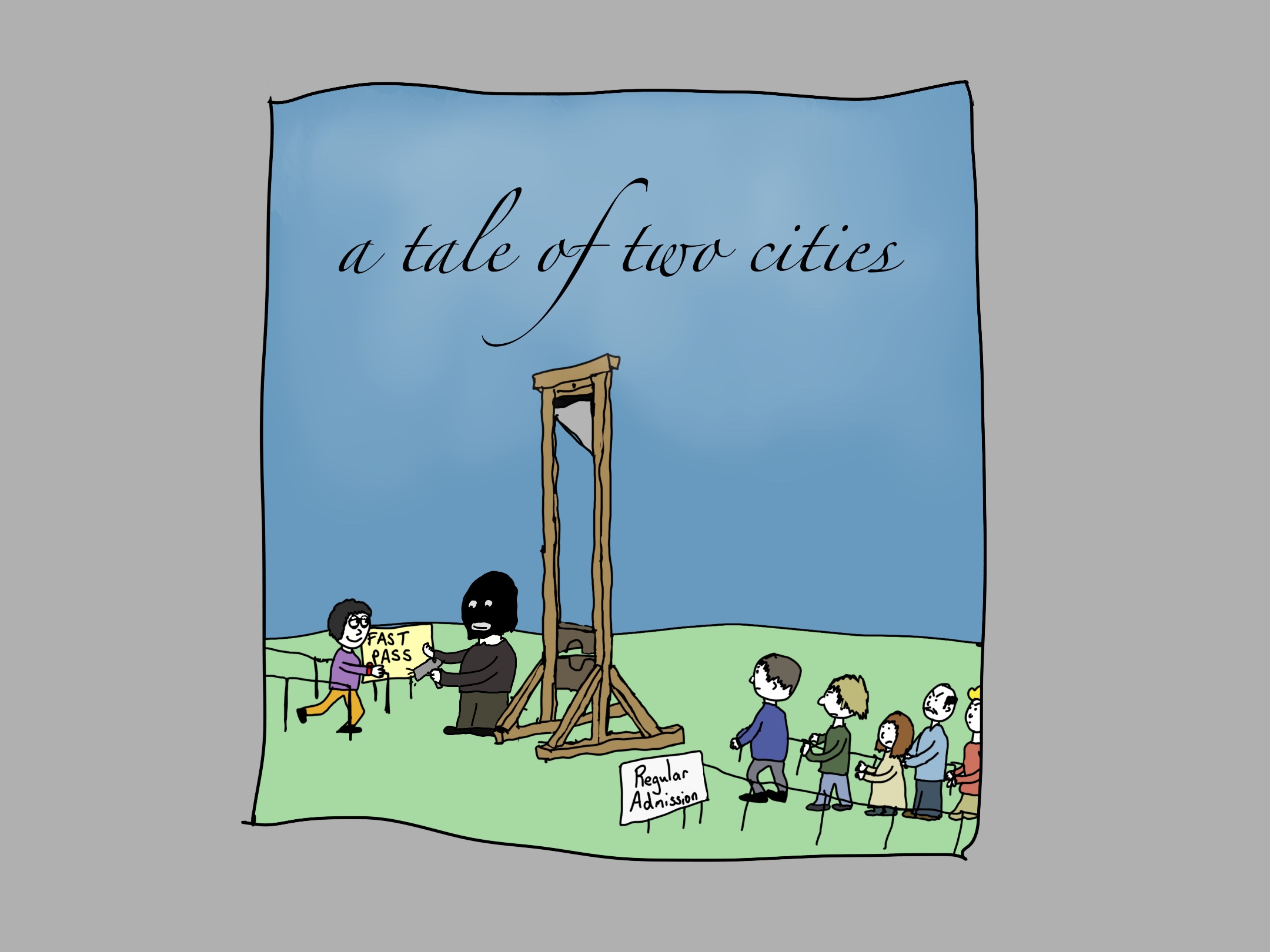
Book Review: A Tale of Two Cities

A Tale of Two Cities, by Charles Dickens 

More Dickens? Your goddamn right there’s more Dickens, and this is one of his heavy hitters (though actually one of his shortest novels). A Tale of Two Cities was required reading when I was in high school. I didn’t read it then. I was a smartass and coasted through high school. 

I finally did read it during my Dickens kick in 2023, and I’m glad I did. It’s great! It’s exciting! It’s tense! It’s perfect from iconic beginning to iconic end. 

Of the Dickens works I’ve read, this is easily the darkest. Not only is the subject matter dour (beheadings and all that), but it also lacks the usual Dickens humor. There are a few oddball characters, but this is mostly a story about very serious folk dealing with dire circumstances. If this book were an instrument, it would be a pipe organ that plays only one low, sustained note. 

Because it doesn’t have the Dickens zaniness I’ve come to love, this isn’t my favorite Dickens book – but it’s certainly up there. The story is great. The characters are interesting. The descriptions are amazing. The themes of class struggle are as relevant as ever. And it helps that this is fast-paced (for Dickens) with all actions leading to the big finale. 

If you missed reading this in high school because you were too busy drawing 3D boxes in the margins of your notebook whilst pondering how Batman would handle a power outage in Jurassic Park, I recommend you revisit this, read it on your own terms, and see what all the fuss is, and was, about. 

Happy Dickens Tuesday!!!!

I’m reviewing books from now until the end of the year to help raise money for Reading is Fundamental. Click here to donate!

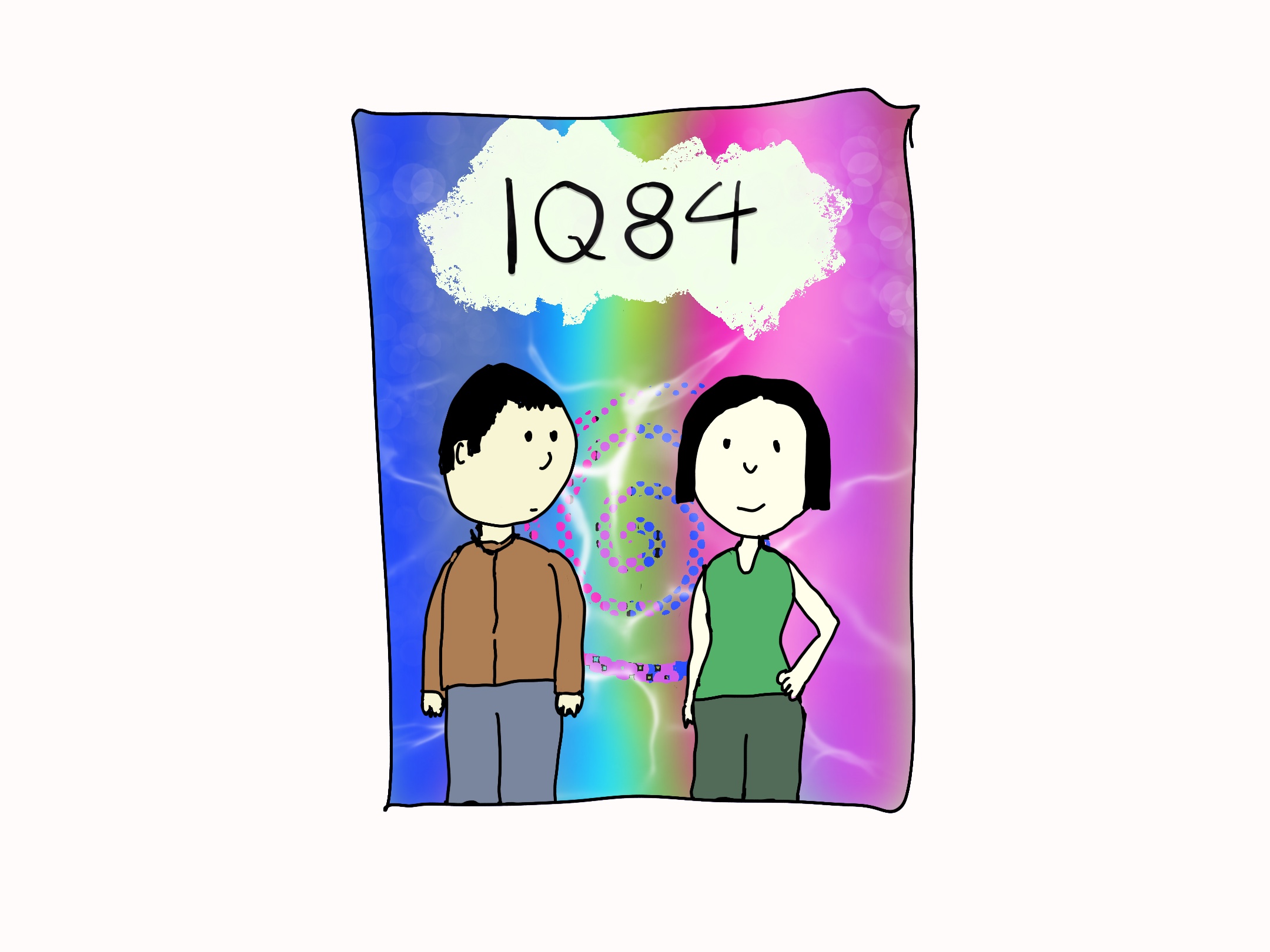
Book Review: 1Q84

1Q84, by Haruki Murakami

You know a book is going to be complex when you need to look up how to pronounce the title. Looks like most people say, “1-cue-8-4.” I call it, “That Q number book thing.” 

This is the second Murakami book I’ve read, and I liked it a lot. Do I understand it? Hahaha…yes. But I’m sworn to secrecy. 

The story follows two protagonists, a young man and young woman, who get transported to an alternate reality. Everything is mostly normal…until it’s not. The two characters spend most of the (long) book apart, but there is a connection between them. 

It’s tough to explain. But as complex as the story gets, it’s never difficult to read. Once again, Murakami shows his powers as a masterful writer. Simple sentences suddenly take abstract twists and turns and before you know it, you’re reading about tiny mythical people who spin cocoons out of air and your brain says, “Yep, this all seems legit. I shall keep reading this normal story.” 

I don’t know how he does it! It’s almost hypnotic. 

The book is long and has a lot of ideas, but it’s not dense in the way that Infinite Jest is dense. Infinite Jest often reads like a smarty-pants college thesis, but 1Q84 often reads like a breezy dream. The biggest problem is that Murakami makes it look easy. So many would-be writers probably think they can be just as wild as him. 

Here’s my attempt at Murakami magical realism:

“Hello,” said the man. 

“I’m glad you’re here,” said the woman, as she turned into an umbrella. 

It’s that easy, folks…

Happy Almost Thanksgiving! Please donate to my Reading is Fundamental campaign and help spread the joy or reading to those who need it!

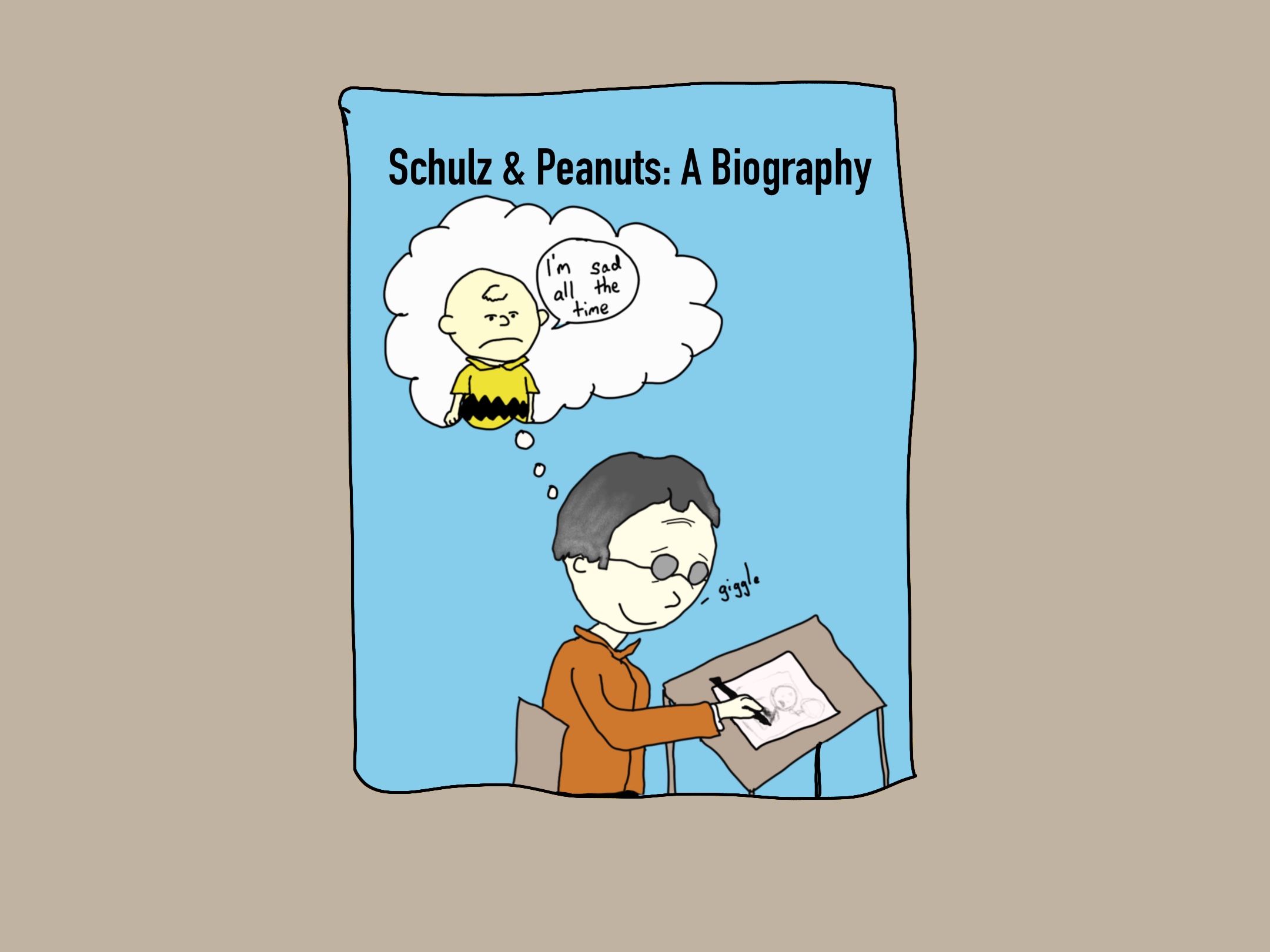
Book Review: Schulz & Peanuts – A Biography

Schulz and Peanuts: A Biography, by David Michaelis

Growing up, I was a huge fan of The Far Side and Calvin and Hobbes. Peanuts was always there on the comics page, but I didn’t care about it. The jokes were never laugh-out-loud funny and a lot of the strips had no jokes at all – just some slice-of-life observation or just a picture of Snoopy ice skating. That’s not a comic! That’s just a lunch box.

As I got older, I appreciated the strip more. What it lacked in bellylaughs it made up for with philosophical ruminations and some adorable art. So, while I wasn’t the biggest Charlie Brown fan, I was curious to know more about his creator.

Unlike a lot of famous people, Schulz didn’t have the ups-and-downs you usually associate with artists. He simply was good…and then everyone liked his stuff. And he got famous. And then he got more famous. And then he (spoiler alert) died. 

His life story is still interesting, especially if you like comic strip history. And easily the most shocking thing about his life are his extra-marital relationships with young women. The dude even slipped in thinly veiled notes to his mistresses in the comic strip! 

I like learning about comic strip creators because so many are reclusive and odd. Maybe it’s because they’re all busy trying to wrangle stressful daily deadlines. Or maybe they’re all socially awkward, sensitive souls who struggle to exist in the public eye because their brains and emotions absorb too much information. Or maybe it’s because they’re all in a secret cult that worships the Dark Lord Marmaduke! 

Why am I reviewing all these books? Great question! I’m doing it to raise money for Reading is Fundamental, an amazing charity that helps spread the magic of reading. Donate today!

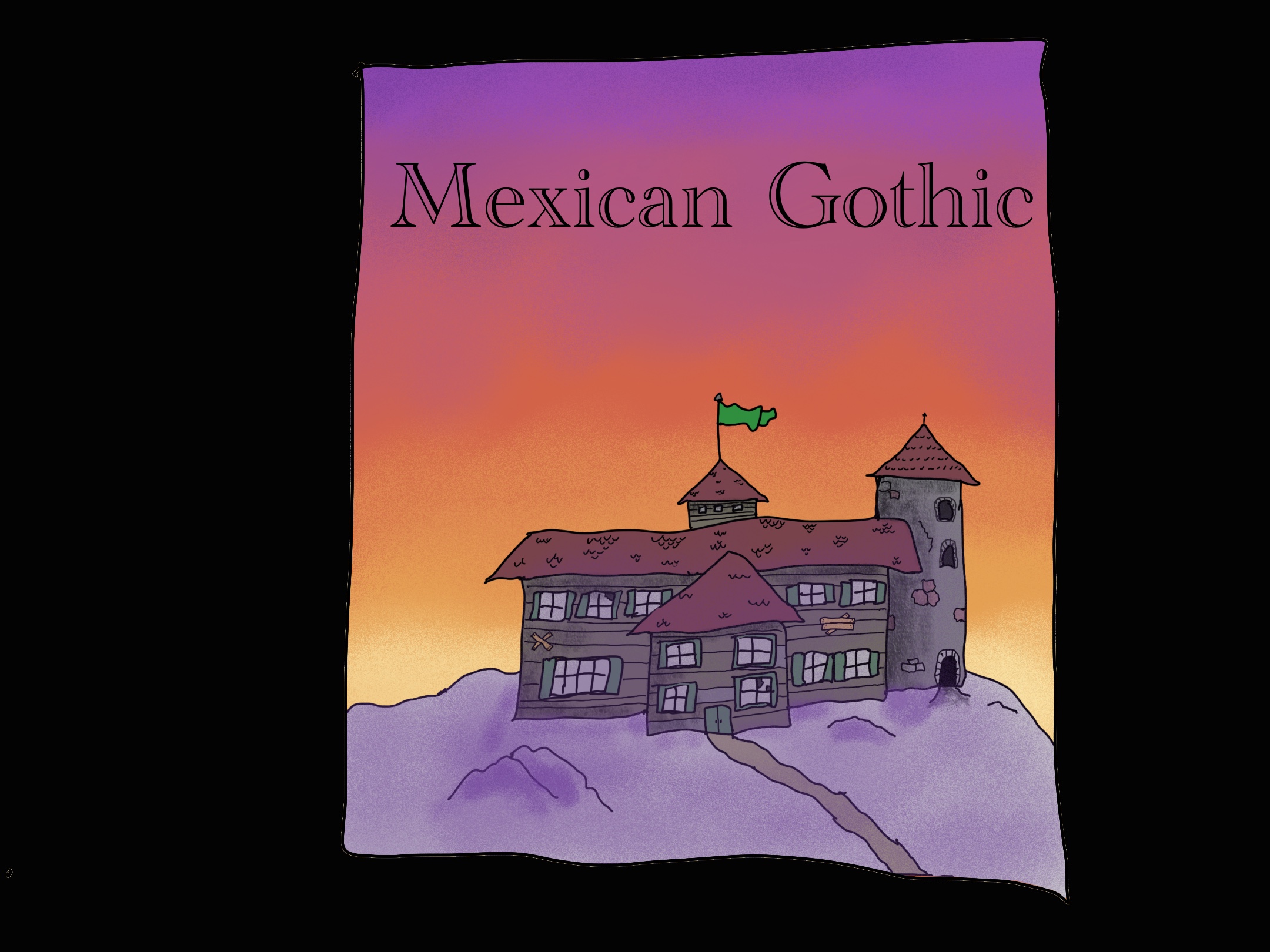
Book Review: Mexican Gothic

Mexican Gothic, by Silvia Moreno-Garcia

Two horror novels in a row! Happy 21-days after Halloween! 

This is just a good ol’ fashioned haunted house story about a spooky family. What sets it apart is the protagonist, a young socialite named Noemí Taboada. She’s a fun, smart character who isn’t the usual “sad girl in a sad world” type. The story is set in Mexico City in the 1950s. There’s a cousin who’s sick, a husband who may be trying to poison her, a strange family, a weird house, a bunch of secrets and everything else you’d want in a somewhat silly/somewhat serious scary story. 

I liked it a lot. It’s a story that makes for a good book and would be the inspiration for a very forgettable, bloated 9-part Amazon Prime show. That it hasn’t yet been turned into a show means either Hollywood has learned that not EVERYTHING needs to be televised or that I haven’t checked my local listings. There’s a great chance this already is a show, it streams on Pringles Premium and has won 7 Emmy awards, and yet I still haven’t heard of it. 

As a show, it might be boring. But for a horror novel? It works! 

It’s the season of giving, so please consider donating to my Reading is Fundamental campaign! RIF gives books and literacy tools to kids. It’s a fantastic charity that needs your support. Click here to donate. Thanks!

Book Review: It

It, by Stephen King

This book, with the title that has total disregard for SEO, is among Stephen King’s most popular, but I didn’t love it. I liked it. I liked parts of it. But as a whole, it’s meh for me.

For one, I don’t think clowns are scary. They may be creepy, but I’d rather see a clown in a storm drain than a spider. You can talk to a clown and maybe reason with the jokester. A spider? They are silent spies of the devil! They don’t talk. They don’t bark. They just…exist. They all pretend they don’t understand English, except for Charlotte and I’m wondering if the words she spelled out in the pig pen were actually AI generated. How else do you explain the weird phrasing of, “Some Pig”? I ran Charlotte’s oeuvre through the AI detector and I think they should rename the book ChatGPT’s Web. Busted! 

Back to clowns. They’re not scary. Pennywise can, and does, take the shape of a spider at times (I think…it’s been a while since I read this). And if the whole book was him as a spider, I would like the book more. 

The scary scenes in the book are actually kind of silly…maybe even stupid. I don’t want to spoil anything for those who haven’t read the book, but don’t expect Exorcist-level frights. 

I do like the non-scary parts. Stephen King has a knack for creating interesting characters and watching the kids (and their adult selves) interact is great. But it starts to drag around page 600.

This is one of King’s longest books, and as much as I liked the characters, the overall story isn’t really worthy of all 1,000 pages. 

Then there’s the out-of-left-field sex scene between the kids that everyone who read the book loves to mention. Why did King include this scene? Either he was trying to say something poignant about the loss of innocence and overstepped, or he didn’t know how to end the story and threw a dart at the ol’ idea board and it landed on, “Sex party.” 

A lot of people love this book, and I can kinda see why. I’m just not a huge fan. I love a lot of King’s other works, but this isn’t a top tier entry in his mountain of books. 

Happy Week Before Thanksgiving! As you gear up for the holiday season, consider donating to my favorite charity, Reading is Fundamental. Click here to donate! 

Book Review: A Visit from the Good Squad

A Visit from the Goon Squad, by Jennifer Egan

I read this. I liked it. I don’t remember it. I looked up a summary so that I could knock out this little review, hoping that a few character names would jog my memory. Nope. I don’t remember any of these people. 

But I did read it. I promise. And I think I liked it.

Thanks to the summary I just read, I can tell you this is a non-linear story about the music industry. I remember that there were a lot of characters, and they were all linked somehow. I also remember there was a chapter that read like a PowerPoint presentation. 

But skimming the summary, it’s clear the book didn’t stick with me. 

There’s nothing wrong with that. My brain is only so big and can only retain so much information. The fact that this Pulitzer Prize-winning book didn’t leave a lasting impression is more about me and my brain than the book itself. 

I could tell you more about the “plot” and “themes” of the book, but all I’d be doing is spitting back what the internet is telling me. Should I give this another read? I probably won’t. It was a fun experience while it lasted, but it’s okay that I don’t remember every bit of it; it’s a lot like a delicious pancake breakfast. 

Books are important, even if you don’t remember the plot!!! I’m raising money for Reading is Fundamental! Click here to donate!

Book Review: The Pickwick Papers

The Pickwick Papers, by Charles Dickens

This was Charles Dickens’ first novel, and it’s less a novel than a bunch of wacky adventures. The overall plot follows Samuel Pickwick and his group of middle-aged buddies as they have British adventures and get into trouble. Like most Dickens novels, this started as a serialized story told over the course of a year or so, and it’s very episodic. Think of this like a TV show before there was electricity. 

Sam Pickwick is a goofy guy. He somehow has money (none of the members of his club seem to have jobs, but they have money) and he wants to go out in the world and have experiences. Most of the adventures are funny, with a lot of slapstick humor. Example: On several occasions the gag is that someone walks into the wrong room and sees another character in bedclothes. That’s the bit. So we’re not really talking about David Sedaris-level comedy here. But the humor is charming. It’s less Far Side than Family Circus

And not everything is played for laughs. There’s a lot of commentary about the foolishness of British society, the legal system, prison, poverty, etc. and you can see all the seeds for later (and better-plotted) Dickens works here. 

What I liked most was thinking about young Dickens writing this – he was a smartass kid who was poking fun at things with his words. I respect that. I did the same thing.

The other thing I liked about this (long!) book is that every chapter has an illustration. The entire book started as a literary experiment in which an artist would draw an illustration and Dickens would write a story to go with it. Over time, the story took shape and I think the illustrations were then dictated by the story instead of the other way around. 

And the last thing I like about the book is the character of Sam Weller. Sam shows up after a few chapters and then steals the show. Think of him as Jim from The Office, providing the right amount of observation to the ridiculous situations. But unlike Jim, Sam is also funny and caring. (Shots fired!)

Sam Weller became the breakout star of the story. But, as a whole, this isn’t a good novel. It’s a weird, fun look into the mind of early Charley D. where you see the beginnings of greatness. I only recommend this if you love Dickens and want to see where it all started.

The best way to celebrate Dickens Tuesday is by donating to my Reading is Fundamental campaign! Click here to donate!