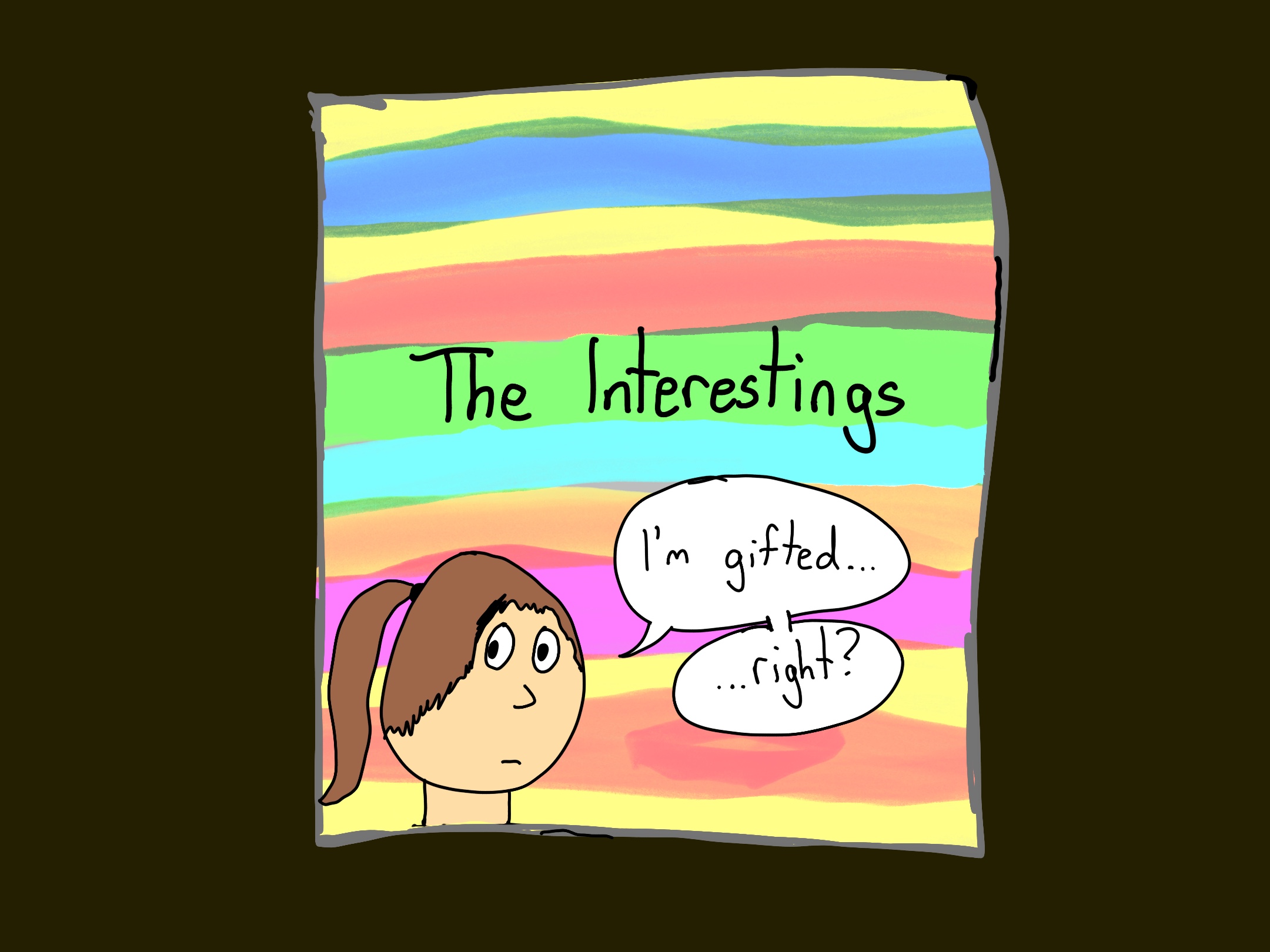
What happens when a bunch of smart, talented kids grow up and realize they’re not all super stars? That’s the overall story of Meg Wolitzer’s fantastic 2013 novel, The Interestings. The book follows the kids throughout their lives, starting with them all attending a smart-kid summer camp.
I don’t want to spoil any of the outcomes, but not everything goes according to plan. This isn’t a tragic book, though there are sad parts. It’s not a comedy, though there are some moments of levity. It’s just a good example of the mythic Great American Novel.
If you ever were in the gifted program in elementary school and now wonder “What happened to my life?!,” this book may speak to you. Note: I was not in the gifted program in any school because I didn’t need extra tests to tell me I’m fantastic. Also, I was bad at math…and English…and putting the straw in my Capri Sun.
I’m reviewing books every day from now until the new year. Help spread the magic of reading and donate to my Reading is Fundamental campaign!
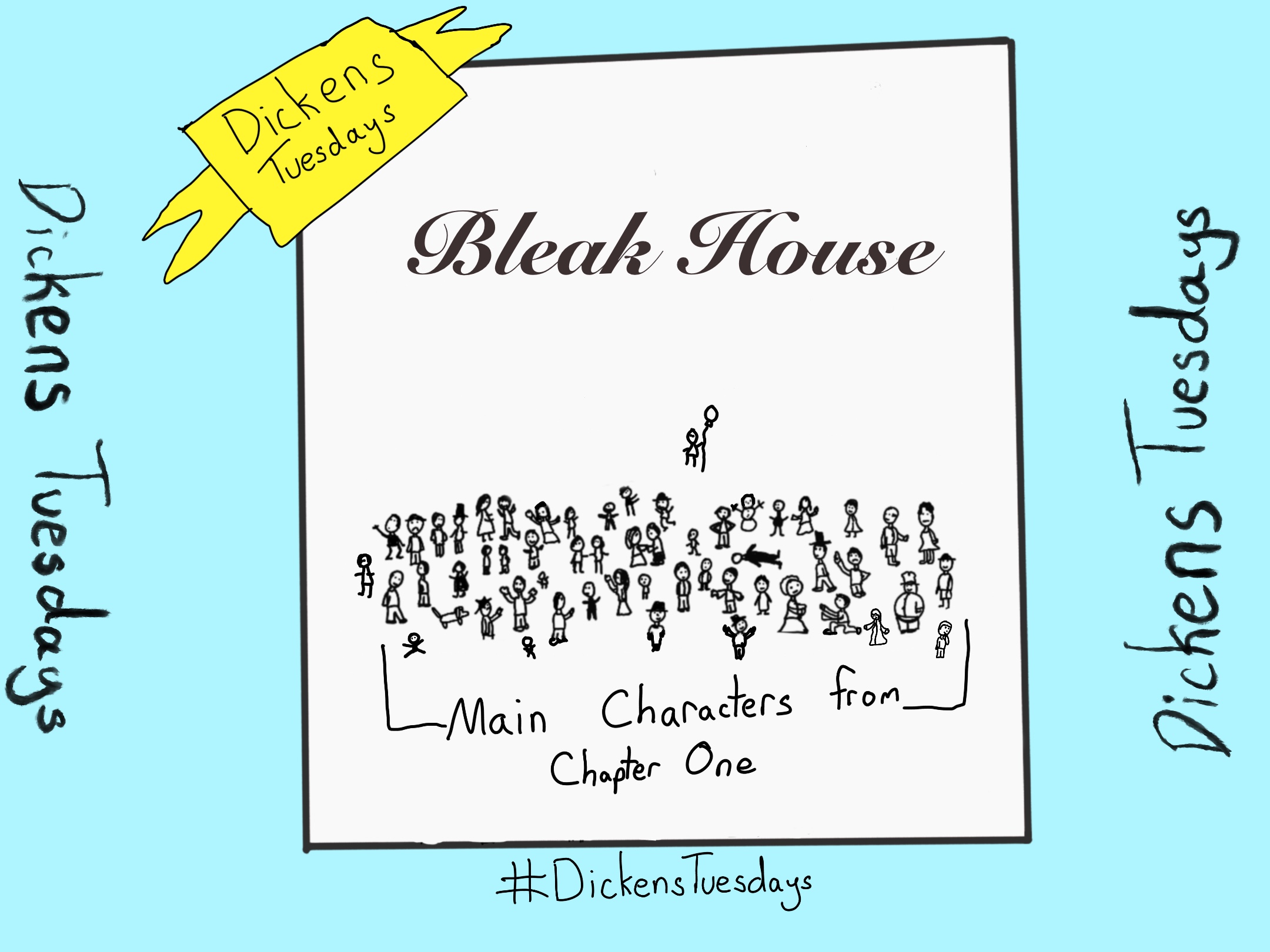
It’s Dickens Tuesday! This is a social media trend that I’m creating starting now and lasting for the next few weeks. Happy Dickens Tuesday, everyone!!!!
I’ve been on a Dickens kick over the last few years, but I almost gave up on this one. At nearly the exact mid-point, I put the book down and seriously considered moving on to another book. Then I checked in on the Charles Dickens subreddit (as one does), and saw that I wasn’t the only one who stopped reading Bleak House in the middle. And every time someone threatened to stop reading, there were always a few comments encouraging the reader to continue, with the promise that, “It’s about to get good!”
And you know what? Reddit was right. And if Reddit is right about Charles Dickens, it’s probably right about everything…
But the book does get good. Really good! There’s even a chase scene! IN A DICKENS BOOK!?! Wild!
The story is split between two narrators: A third-person omniscient narrator, and a first-person account from one of the main characters, Esther Summerson. This can be confusing at first, especially if no one told you that the narrator was going to change. I didn’t know about this, and so a few chapters in, my brain got mad because it couldn’t figure out who was talking to me. (The same thing happens when I sit alone at night, gazing into the fire on the anniversary of the murder of…well, I’ve said too much.)
The story follows a group of characters as they fall in love, deal with British society and do all sorts of Dickensian things. There are a few normal characters and there are tons of wonderfully wacky characters. These characters are so odd and silly that they could slide into any I Think You Should Leave sketch.
(The wacky characters are part of the reason I’ve fallen in love with Dickens books over the past few years. You’ll see more Charley D. in upcoming book reviews. On Tuesdays! TELL THE SUBREDDIT!!!)
In this book, everything is connected to a convoluted court case, Jarndyce v. Jarndyce. It takes 500 pages to set the stage and then everything comes together in the last 500 pages. Does it all crash together violently in the end like a kinetic Tarantino movie? Maybe not. But everything does fit together nicely in this expertly plotted tale. Bleak House started as one of my least favorite books and by the last page, became one of my favorites.
Like a little kid at a family Christmas party who speaks in full sentences and calls grownups by their first names, this feels like a YA novel that’s dressing up in grownup clothes. That’s not a bad thing; the tone just feels a little odd. I kept waiting for a love triangle or a Hunger Game to pop up.
The story is about a young woman (of course) who can do magic (of course) and attends a new school (obviously). See! Doesn’t this sound like a YA book? You can almost hear the Paramore song playing in the background!!!
But it’s not a YA book. I know because I called the book police and they told me, “Sir, that’s not a YA book. Also, audio books count as reading and if you don’t finish a book we will find you and hurt you.”
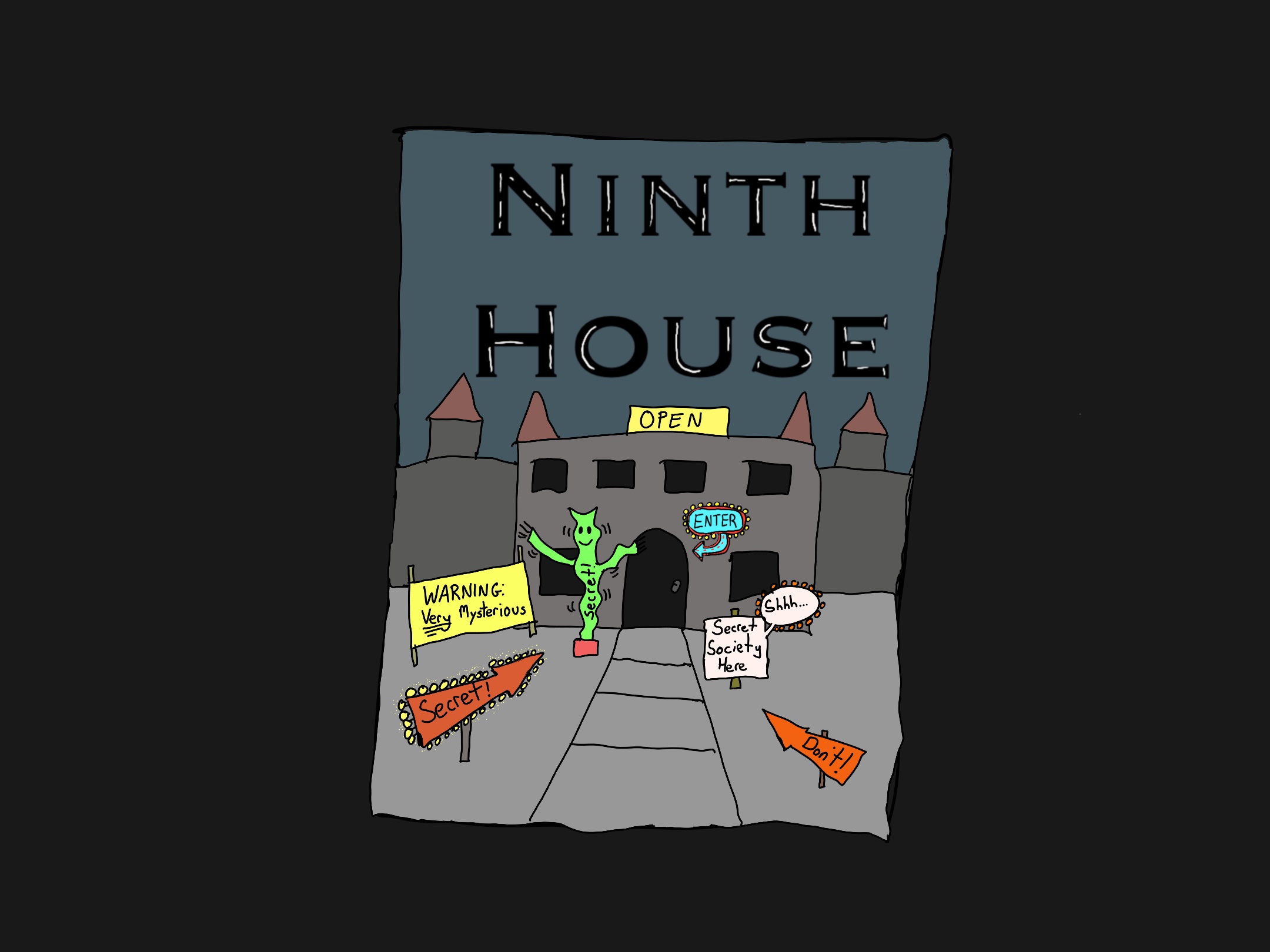
Genre’s aside, let’s get back to the story…and the story is kind of good. The main character is accepted into Yale University’s secretive occult society where bad things happen. There are several dark, secret magic societies at the famed college and they all have different levels of evilness occurring. It’s up to the main character to deal with all the drama and the magic and the evil.
Secret societies make for fun stories because anything can happen behind closed doors. I wish I was a member of a secret society. And if I were a member, I promise not to tell anyone about it, and I would bring snacks. If you’re in a cool secret society, and looking for new members, hit me up. But I won’t join your society if it’s about intolerance, violence or if any part of the initiation process involves blood or taking my shirt off in the pool.
There’s a lot of magic system lore involved in this book. Magic system lore seems to be a necessary trope of modern fantasy. I guess people like to read about rules? Maybe the next bestseller will just be the rules to pinochle with a trendy cover and a title like, “A Storm in Paris.” Done. BookTok would eat that up!!!
My brain checks out when they start explaining how the magic works. Thankfully, the rest of the story is weird and fun and the book never gets too caught up in its own magic.
While the tone of the book is mature, and there is a good deal of death and violence, something about how the story is told made me think of YA books. It might be because the characters are young, unrealistic and are trying to figure out their lives in this crazy mixed up world. Or maybe it’s because the book made me feel old. Get off my lawn, magic kid!!!
Still, not a bad book.
I’m raising money for the great charity Reading is Fundamental! Click here to donate!
Yes, I read this. No, I’m not kidding! I read the whole thing. In fact, I read it 1.5 times. The epic Gen X book about tennis, addiction and entertainment is 1,000+ pages punctuated with another 100+ pages of detailed endnotes. I first tried to read it when I was just out of college, a cool 20-something who wanted to look even cooler. So I bought this big ol’ book and started reading. After about 600 pages, I drifted away from the book – not because I didn’t like it, but because I was a cool guy with cool things to do (i.e. playing Halo 3). And this is not a book that you can just dip into every few weeks, read a few pages, and go about your cool-guy life.
Years later, when I was a thoughtful, handsome 30-something who knew everything about life, I went back to the book and dedicated time to reading it. Because I’m a slow reader, and this book is an unabridged dictionary dressed up as a novel, it probably took 6 months to finish it…at least! This book is a behemoth of words – big words – long sentences – confusing, convoluted plots – a billion characters…it’s a lot. It’s the entire Cheesecake Factory menu of post-modern literature.
What did I think of it? At the time, I loved it. The minute I finished the book, I went online to tell the world that this is the peak of human art. I ranked it as my favorite book of all books!
But now, as a distinguished, world-weary, even more handsome 40-something living in a post-Twitter world, my love for the book has dipped. It’s a book that connects with young people (young men, specifically, because those are the people who CANNOT shut up about this book). I admire the writing, the literary gymnastics, the absurd sense of humor, but there is the overall gimmick of the novel (the length, the density, the end notes, etc.) that makes it a little show-offy. Did I mention it’s long?
David Foster Wallace was a genius. No question. And this is a great book. No question. But it’s not my favorite book of all books.
Tastes change. People change. Things you liked years ago are now things you like less. Life’s like that. And to explain why life is like that, perhaps I should write a 600,000 word novel about a teenager who works in a toothpick factory whose mundane day-to-day life somehow explains and mimics the Vietnam War as told through the perspective of an unreliable narrator who, if you read the 500 pages of end notes and know Morse code, you’ll realize is the ghost of Ronald Reagan. Proposed title: Pick It. Trust me, it’ll make sense after a white guy explains it to you in a 4-hour YouTube essay.
I’m raising money for the great charity Reading is Fundamental! Click here to donate!
The women are normal-sized. But, honestly, the false advertising of the title is the only bad thing I have to say about this. Little Women is perfect. It’s funny. It’s dramatic. It’s romantic. It’s sad. It’s good.
Little Women was never required reading for me in school, so I came to the book on my own, as an adult. That shift in perspective from being a kid who is forced to read it to being an adult who wants to read it is important. Student Dan would have rolled his eyes at this story of sisterhood, but Regular Dan loved it.
I’ve never seen a film-version of Little Women, but I know there are a few fan-favorites, including the most recent Greta Gerwig adaptation. I might get around to checking that out as soon as I discover a few more hours in the day. (I think there are some extra hours hiding around the backside of the clock, but to get at them one needs a sharp paperclip and magic balm.)
Jo is easily one of the best characters of classic American literature. She’s smart, tough, witty and you can’t help but root for her by yelling into the book, “You deserve happiness, Jo! And I sure hope none of your sisters die!”
What more can be said about this? A lot, but I’m not going to write your school report for you.
If you haven’t read Little Women, it’s not too late…and not just because I’m about to access those extra hours as soon as I get my balm enchanted. The book feels timeless and despite the title, speaks to all audiences, including big men.