 It’s important to establish the point of view of your story. Before typing the first word, you must identify who’s telling the story and how. Will your story be told by a man? A woman? A sexless beast named The Un-Thing? Maybe a cat is telling your story? Or a really smart pen. The possibilities are endless, and by endless, that means you have about ten options. Let’s examine the use of each POV type.
First Person Narrative
If you’re writing about a sad woman trying to find herself in this crazy world, you’ll need to use a first person point of view. In first person storytelling, the events are explained through the thoughts of the main character, sometimes named Beatrice. It’s an easy way to clarify your main character’s feelings and motivations. Use this point of view if you want to keep something hidden from the reader and the main character. Here’s an example:
My name is Beatrice and I’m sad because I need to find myself. I sure hope my best friend isn’t evil.
And then in the last chapter, we’d learn that the friend was, indeed, evil. How shocking, right?
Second Person Narrative
This is weird. It’s sort of like the book is written as a letter and the reader is the recipient of the letter…sort of. Don’t use this point of view because it is dumb and stupid and I don’t know how.
Third Person Omniscient Narrative
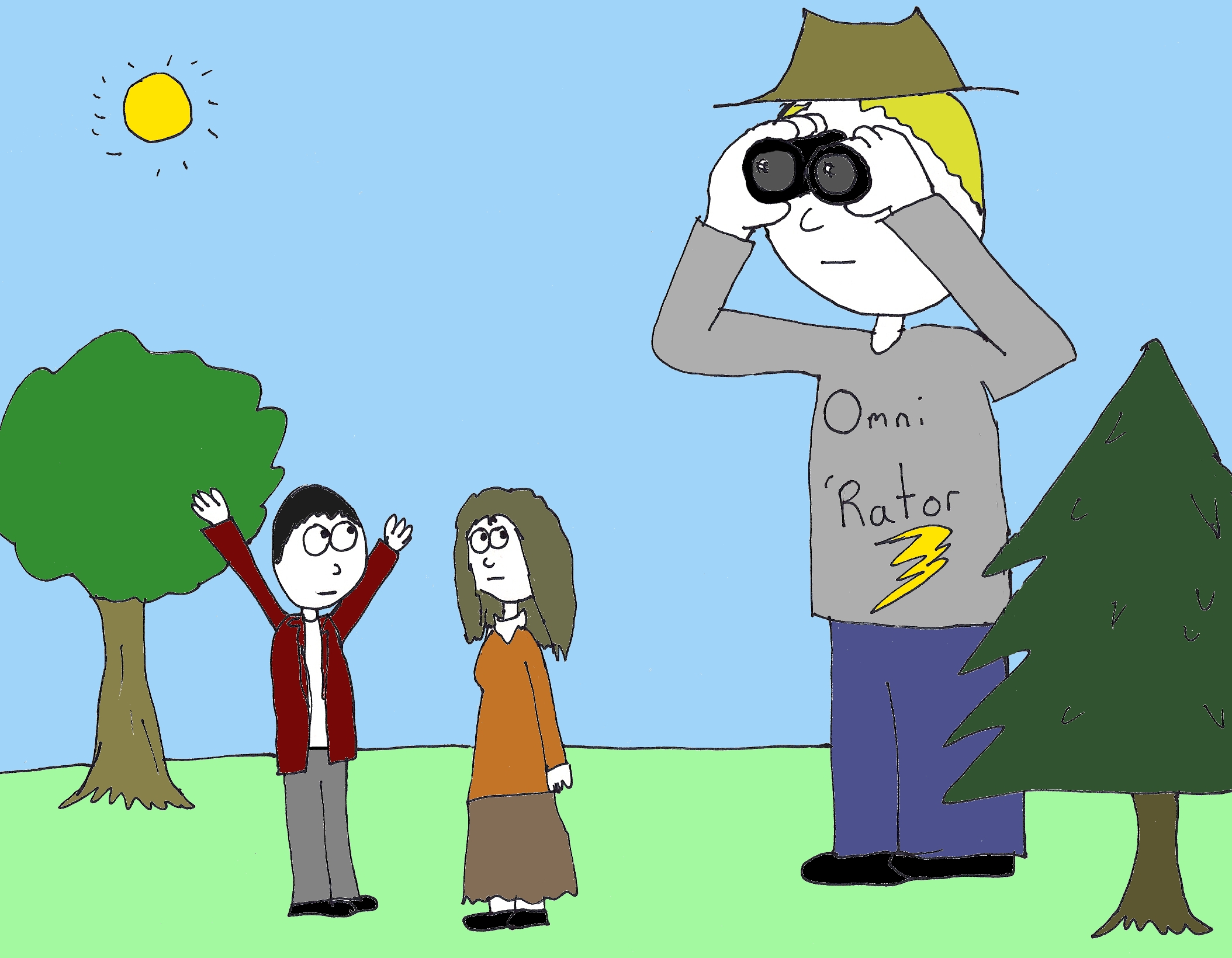
This common way to tell a story uses an all-knowing, all-powerful, super being as the narrator. This narrator can see everything, all the time. So they’re probably pretty tall, or inside a blimp. How can they know what the characters are feeling and thinking? The omniscient narrator once made a bet with a Wind Wizard, and won. Since that fateful day, the omniscient narrator is able to read minds and see through most walls. (Note: omniscient narrators cannot see through wicker.)
Example:
Once upon a time there was a man named Benny Hines who lived in a house. His wife had blonde hair and liked noodles. Benny’s neighbor Shamus had 17 shirts in the closet and was allergic to apples. Meanwhile, in China, Edgar was sleeping and dreaming of robotic women. Meanwhile, in Brazil, it wasn’t raining.
Fourth Person Narrative
This can refer to two different things. First, it might mean the original narrator dies and a new narrator takes his place. Example:
And so Jimmy went to the lake where he saw a big…Ouch! My organs!
Um. What’s up? My name is Trevor. I’ll take over from here. Where were we? Who the hell is Jimmy? What’s this book about? Lame. Want to play me in Mario Kart?
Fourth Person Point of View may also refer to a story told by someone who wasn’t even there when the events took place. Example:
Hey. What the hell happened? Why is everyone crying? What’s wrong with that horse?
The End
Smartass Fifth Person Narrative
This is how fancy, post-modern novels are written. The narrator is a self-aware character in the story, and the story is really about the creation of the story and the author is a real smartass about it. Example:
“The man is in the hallway,” I said to the reader of this book.
Sixth Person Narrative
Please see “Smartass Fifth Person Narrative” but make it even more confusing. Example:
“’The man is in the hallway,’ said the narrator of this book,” wrote the author.
Seventh Person Narrative
When no narrator is used, we call it Seventh Person Narrative. Example:
Things.
The End
Eighth Person Narrative
This refers to a dog or cat narrator, since dogs and cats are about 1/8th as smart as a human and don’t really count as a person at all. If your story is told from the point of view of eight cats or eight dogs grouped together, then you’re using First Person Perspective, according to the Law of Literary Fractions. Example:
Sleep. Sleep. Sleep. Slightly open eyes. Sleep. Sleep. Sleep. Forget what my tail is. Watch tail expectantly. Sleep. Sleep.
Ninth Person Narrative
Use this if your story is really just a sound or odor. Example:
…
[Smell your keyboard. There. That’s the whole story.]
Tenth Person Narrative
You’re not writing a story at all, but instead you’re making macaroni salad and for some reason calling it a novel.
Homework Assignment: This week, write a paragraph about a man who finds a harp, but the harp is really some sort of turtle. The story should end with, “Mucus was everywhere.” Use three different points of view in the paragraph, and the paragraph should be less than five sentences. Due Thursday, at 9:30 in the afternoon. No partial credit. Spelling counts. Counting spells. Show all your work.
Tune in next time for more writing tips, when we’ll explore the art of character creation and learn how adding the adjective “bonkers” can greatly influence the protagonist’s personality.
Until then, remember: Great writing is a thing that is good and nice.